How to Build a Skincare Routine for Acne-Prone Skin: A Complete Beginner's Guide

Updated: Aug 17
Acne is one of the most common skin concerns affecting teenagers and adults alike. Whether you're dealing with occasional breakouts, persistent pimples, blackheads, whiteheads, or painful cystic acne, having the right skincare routine can make a significant difference.
Many people spend hundreds or even thousands on skincare products without seeing results because they either use the wrong products or follow an overly complicated routine.
The truth is that an effective skincare routine for acne-prone skin doesn't have to be expensive or complicated. What matters most is consistency, choosing the right ingredients, and avoiding common mistakes.
In this guide, you'll learn exactly how to build a skincare routine for acne-prone skin, including the best cleanser, moisturizer, sunscreen, active ingredients, and mistakes to avoid.

Understanding Acne-Prone Skin
Before building a skincare routine, it's important to understand why acne occurs.
Acne develops when:
Excess oil (sebum) is produced
Dead skin cells clog pores
Bacteria multiply inside clogged pores
Inflammation develops
Several factors can contribute to acne, including:
Hormonal changes
Genetics
Stress
Diet
Certain medications
Incorrect skincare products
Excessive touching of the face
While skincare alone cannot cure all forms of acne, the right routine can significantly reduce breakouts and improve overall skin health.
A good skincare routine is essential, but preventing acne also depends on everyday habits like proper hygiene, makeup removal, stress management, and quality sleep. Learn more in our guide on how to prevent new pimples instead of just treating them.

The Ideal Skincare Routine for Acne-Prone Skin
A simple skincare routine should include:
Cleanser
Treatment or active ingredient
Moisturizer
Sunscreen (morning only)
Let's discuss each step in detail.
Step 1: Choose the Right Cleanser
A cleanser removes dirt, oil, sweat, sunscreen, and pollutants from the skin.
However, many people with acne make the mistake of using harsh cleansers that strip away natural oils. This often causes irritation and can actually worsen acne.
What to Look for in a Cleanser
Choose a cleanser that is:
Gentle
Non-comedogenic
Fragrance-free (if possible)
Suitable for oily or acne-prone skin
Beneficial Ingredients
Look for cleansers containing:
Salicylic Acid
Zinc
Niacinamide
Green Tea Extract
Ceramides
Salicylic Acid Cleansers
Salicylic acid is one of the best ingredients for acne-prone skin because it can penetrate deep into pores and remove excess oil and dead skin cells.
Benefits:
Unclogs pores
Reduces blackheads
Controls oil
Helps prevent future breakouts
How Often Should You Cleanse?
Morning: Wash your face once after waking up.
Night: Cleanse again before bed to remove sunscreen, dirt, and oil buildup.
Avoid washing more than twice daily unless instructed by a dermatologist. Over-cleansing can damage the skin barrier and increase irritation.
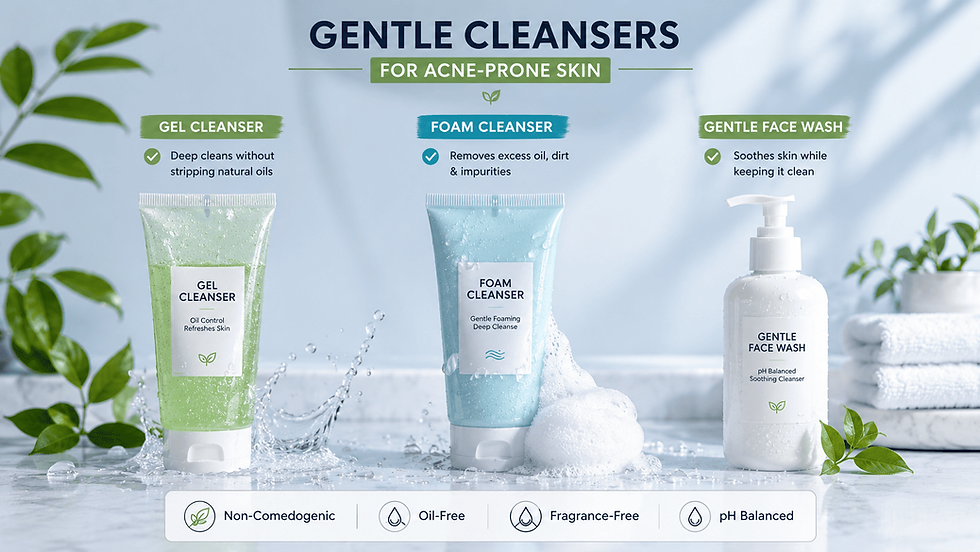
One of the most important parts of any skincare routine is choosing a cleanser that matches your skin type. The wrong cleanser can leave your skin feeling dry, irritated, or overly oily, making it harder for the rest of your routine to work effectively. If you're unsure which face wash is right for you, explore our guide to the best cleansers for acne-prone skin.
Step 2: Use Effective Active Ingredients
Active ingredients are the products that directly target acne.
You don't need multiple active ingredients at once. In fact, using too many can worsen your skin.
Let's discuss the most effective acne-fighting ingredients.
Salicylic Acid
Salicylic acid is a beta-hydroxy acid (BHA).
It is particularly useful for:
Oily skin
Blackheads
Whiteheads
Mild acne
Benefits:
Penetrates deep into pores
Dissolves oil buildup
Reduces inflammation
Prevents clogged pores
Recommended Usage:
Start with 2-3 times weekly
Gradually increase frequency if your skin tolerates it well.
Benzoyl Peroxide
Benzoyl peroxide kills acne-causing bacteria and reduces inflammation.
It is highly effective for:
Red pimples
Inflammatory acne
Moderate acne
Benefits:
Reduces bacterial growth
Decreases redness
Prevents future breakouts
Recommended Strength:
2.5% to 5% for beginners
Higher concentrations aren't necessarily more effective and may cause irritation.
Niacinamide
Niacinamide is one of the most versatile skincare ingredients.
Benefits include:
Reduces oil production
Minimizes redness
Strengthens skin barrier
Improves post-acne marks
Niacinamide is generally well-tolerated and can be used daily.
Retinoids
Retinoids are considered one of the gold-standard treatments for acne.
They work by:
Increasing cell turnover
Preventing clogged pores
Reducing acne formation
Improving acne scars
Common retinoids include:
Adapalene
Retinol
Tretinoin (prescription)
Beginner Tips:
Start slowly
Use 2-3 nights weekly
Apply moisturizer afterward
Always use sunscreen during the day
Azelaic Acid
Azelaic acid is particularly beneficial for:
Acne
Redness
Hyperpigmentation
Acne scars
Benefits:
Reduces inflammation
Fights acne-causing bacteria
Improves uneven skin tone
It is often a good choice for sensitive skin.
Not sure which active ingredient is right for your skin? Before building your routine, read our complete guide on Best Skincare Ingredients for acne-Prone Skin to understand how salicylic acid, niacinamide, benzoyl peroxide, azelaic acid, and retinoids work and which skin types they suit best.

Step 3: Never Skip Moisturizer
One of the biggest myths in skincare is that oily or acne-prone skin doesn't need moisturizer.
In reality, everyone needs moisturizer.
When skin becomes dehydrated, it may produce even more oil, potentially worsening acne.
Why Moisturizer Is Important
A good moisturizer helps:
Repair the skin barrier
Reduce irritation
Prevent dryness
Improve tolerance to acne treatments
What to Look for in a Moisturizer
Choose a moisturizer that is:
Lightweight
Oil-free
Non-comedogenic
Fragrance-free
Best Moisturizer Ingredients for Acne-Prone Skin
Ceramides: Help restore the skin barrier and prevent moisture loss.
Hyaluronic Acid: Provides hydration without feeling greasy.
Glycerin: Attracts water into the skin and maintains hydration.
Panthenol: Calms irritation and supports skin healing.
Niacinamide
How to Apply Moisturizer
Apply moisturizer:
Morning after treatment products
Evening after active ingredients
Use a pea-sized amount for the entire face.
Step 4: Sunscreen Is Non-Negotiable
If you use acne treatments but skip sunscreen, you're undermining your results.
Sun exposure can:
Increase hyperpigmentation
Worsen acne marks
Damage the skin barrier
Accelerate skin aging
Choosing the Best Sunscreen for Acne-Prone Skin
Look for:
SPF 30 or higher
Broad-spectrum protection
Lightweight texture
Non-comedogenic formula
Gel-Based Sunscreens
Gel sunscreens are excellent for oily and acne-prone skin because they:
Feel lightweight
Absorb quickly
Leave less greasy residue
Mineral vs Chemical Sunscreens
Mineral Sunscreens: Contain Zinc Oxide and Titanium Dioxide. Advantages: Suitable for sensitive skin and less irritating.
Chemical Sunscreens: Contain UV filters that absorb UV radiation. Advantages: Lightweight texture and easier blending.
Both can work effectively if the formulation suits your skin.
Morning Skincare Routine for Acne-Prone Skin
A simple morning routine:
Step 1: Gentle cleanser
Step 2: Niacinamide serum (optional)
Step 3: Moisturizer
Step 4: Sunscreen SPF 30+
This routine protects your skin while minimizing irritation.
Still unsure which acne advice to trust? Many popular skincare tips are actually myths that can do more harm than good. Read our 10 Common Acne Myths You Should Stop Believing (Backed by Science) to separate facts from fiction and make informed decisions for healthier, clearer skin.

Night Skincare Routine for Acne-Prone Skin
Step 1: Cleanser
Step 2: Acne treatment (salicylic acid, retinoid, benzoyl peroxide, or azelaic acid)
Step 3: Moisturizer
Consistency is more important than using many products.
Common Mistakes That Make Acne Worse
Many people unknowingly worsen their acne through skincare mistakes. Let's examine the most common ones.
Mistake #1: Using Too Many Products
Adding multiple serums, acids, and treatments often leads to:
Irritation
Redness
Skin barrier damage
Keep your routine simple.
Mistake #2: Over-Exfoliating
Exfoliating every day is unnecessary for most people.
Over-exfoliation can cause:
Dryness
Sensitivity
Increased breakouts
Most people only need chemical exfoliation a few times per week.
Before introducing multiple active ingredients, make sure your skin barrier is healthy. A compromised barrier can increase irritation, worsen breakouts, and make acne treatments less effective. Our complete skin barrier repair guide explains how to recognize the signs of damage and restore your barrier safely.
Mistake #3: Picking Pimples
Popping pimples can:
Spread bacteria
Increase inflammation
Cause scarring
Create dark spots
Avoid touching active acne.
Mistake #4: Skipping Moisturizer
Many acne sufferers avoid moisturizers because they fear breakouts. However, dehydrated skin often becomes more irritated and oily.
Mistake #5: Skipping Sunscreen
Without sunscreen:
Acne marks last longer
Hyperpigmentation worsens
Skin damage accumulates
Daily sunscreen use is essential.
Mistake #6: Expecting Overnight Results
Acne treatments require patience. Most ingredients need 6 to 12 weeks before noticeable improvements appear. Consistency matters more than constantly changing products.
Mistake #7: Following Every Social Media Trend
Not every viral skincare product is suitable for acne-prone skin.
Always evaluate:
Ingredients
Skin type compatibility
Scientific evidence
Avoid purchasing products solely because they're trending.
Even after you get your acne under control, you may still notice dark spots or red marks lingering on your skin. These post-acne marks can take weeks or even months to fade. Learn the science behind the healing process in our guide Why Acne marks Take So Long to Fade.
Lifestyle Tips for Managing Acne
While skincare helps, lifestyle factors also play a role.
Consider:
Getting adequate sleep
Managing stress
Drinking enough water
Eating a balanced diet
Washing pillowcases regularly
Cleaning phone screens frequently
Avoiding excessive face touching
These habits support overall skin health.
When to See a Dermatologist
Consult a dermatologist if:
Acne is severe
Acne is painful
You have cystic acne
Over-the-counter products aren't helping
Scarring is developing
Professional treatment can prevent long-term skin damage.
Still getting acne even after following a proper skincare routine? Read Why Am I Getting Pimples Despite Having a Skincare Routine? to discover other factors such as hormones, stress, diet, and lifestyle habits that may be contributing to persistent breakouts.
Final Thoughts
Building a skincare routine for acne-prone skin doesn't require dozens of products. The most effective approach is often the simplest one.
Focus on four essentials:
Gentle cleanser
Proven acne treatment ingredients
Lightweight moisturizer
Daily sunscreen
Avoid common mistakes like over-exfoliating, skipping moisturizer, picking pimples, and constantly changing products.
Remember that acne improvement takes time. With consistency, patience, and the right skincare products, most people can achieve healthier, clearer skin and reduce future breakouts.
If you are dealing with hyperpigmentation but unsure of which ingredients to use tgwn read our article Best Ingredients for hyperpigmentation.


Comments