Why Acne Marks Take So Long to Fade: The Science Behind Post-Acne Skin Healing

Updated: Aug 6
Acne may disappear within a few days or weeks, but the marks it leaves behind often linger for months. Many people wonder why their pimples are gone, yet the dark or red spots remain.
It can feel frustrating, especially when you're following a skincare routine consistently but don't see immediate results.
The truth is that acne marks fade slowly because your skin needs time to repair itself. Factors like inflammation, sun exposure, skin type, and the products you use all affect how quickly your skin recovers.
In this guide, you'll learn the science behind acne marks, the difference between post-inflammatory hyperpigmentation (PIH) and acne scars, why healing takes time, ingredients that actually help, and what realistic expectations look like.

What Are Acne Marks?
Acne marks are discolorations that remain after a pimple has healed. They are not active acne, nor are they permanent scars in many cases. Instead, they are signs that your skin is still recovering from inflammation.
Many people mistake acne marks for scars, but they are different conditions that require different treatments.
The most common types of acne marks include:
Brown or dark spots after pimples
Pink or red marks after inflammation
Temporary discoloration that gradually fades over time
These marks are usually easier to treat than true acne scars because they don't involve permanent damage to the skin's structure.
you're still dealing with active breakouts, start with our guide How to Build a Skincare Routine for Acne-Prone Skin before focusing on fading acne marks.
PIH vs Acne Scars: What's the Difference?
One of the biggest misconceptions in skincare is assuming every mark left behind by acne is a scar.
Post-Inflammatory Hyperpigmentation (PIH)
Post-inflammatory hyperpigmentation (PIH) occurs when inflammation causes the skin to produce excess melanin. As the pimple heals, this extra pigment remains, creating a brown, tan, or dark spot.
PIH is especially common in people with medium to deeper skin tones, although it can affect anyone.
Characteristics of PIH include:
Flat spots
Brown, dark brown, or grayish discoloration
No change in skin texture
Gradually fades over weeks or months
The good news is that PIH is temporary. With proper skincare and sun protection, it usually fades over time.
Post-Inflammatory Erythema (PIE)
Some people notice pink or red marks instead
of brown ones. This condition is called post-inflammatory erythema (PIE).
Unlike PIH, PIE results from damaged tiny blood vessels rather than excess pigment.
It is more common in lighter skin tones and often takes several months to improve.
Acne Scars
True acne scars occur when inflammation damages collagen in the skin.
These scars change the texture of your skin rather than just its color.
Common acne scars include:
Ice pick scars
Boxcar scars
Rolling scars
Raised (hypertrophic) scars
Unlike PIH, acne scars usually don't disappear on their own and often require professional treatments such as microneedling, chemical peels, laser therapy, or subcision.

Why Acne Marks Take So Long to Fade
Many people expect acne marks to disappear within a few weeks. Unfortunately, skin healing doesn't work that quickly.
Several biological processes happen after a pimple heals.
1. Your Skin Needs Time to Repair Itself
Every pimple causes inflammation.
Inflammation damages skin cells, blood vessels, and surrounding tissue. After the acne clears, your body begins repairing the affected area.
This repair process includes:
Removing damaged cells
Producing new skin cells
Replacing old pigment
Restoring the skin barrier
Since skin renews itself approximately every four to six weeks, fading marks naturally takes multiple skin cycles.
A damaged skin barrier can slow skin healing, causing post-acne marks to linger longer than they otherwise would. If your skin is struggling to recover, learn how to repair your skin barrier with our complete guide.
2. Excess Melanin Doesn't Disappear Overnight
When inflammation triggers melanocytes, they produce more melanin than usual.
The excess pigment becomes trapped within skin cells.
As new skin cells gradually replace old ones, the pigment slowly moves toward the surface and eventually sheds.
This process is slow, especially if the pigmentation extends deeper into the skin.
3. Severe Acne Causes More Inflammation
Large, painful cysts create significantly more inflammation than small whiteheads.
Greater inflammation usually means:
More pigment production
Longer healing times
Increased risk of scarring
People with cystic acne often notice marks lasting much longer than those left by mild acne.
4. Picking Pimples Makes Healing Slower
One of the biggest reasons acne marks persist is picking or squeezing pimples.
Picking causes:
Additional inflammation
More skin injury
Higher melanin production
Increased risk of infection
Greater chance of permanent scars
Avoid touching active acne whenever possible.
How Sun Exposure Makes Acne Marks Worse
Sun exposure is one of the most overlooked reasons acne marks remain visible for months.
When ultraviolet (UV) rays hit your skin, they stimulate melanin production as a protective response.
This causes existing dark marks to become:
Darker
More noticeable
Slower to fade
Even brief periods outdoors without sunscreen can delay improvement.
Daily sunscreen is one of the most effective ways to prevent acne marks from worsening.
Choose a broad-spectrum sunscreen with SPF 30 or higher and apply it every morning, even on cloudy days or when staying indoors near windows.
Consistent sun protection not only helps existing marks fade faster but also reduces the risk of developing new pigmentation after future breakouts.

Understanding the Skin Healing Process
Your skin follows a remarkable healing journey after every pimple.
Stage 1: Inflammation
The immune system sends white blood cells to fight bacteria and repair damaged tissue.
Redness, swelling, and tenderness occur during this stage.
Stage 2: Tissue Repair
New skin cells begin replacing damaged ones.
Collagen production increases if deeper layers were affected.
Pigment-producing cells slowly return to normal activity.
Stage 3: Remodeling
The skin continues renewing itself through natural cell turnover.
Old pigmented cells gradually shed while healthier skin replaces them.
This final stage may last several months depending on the severity of the acne and your individual healing process.
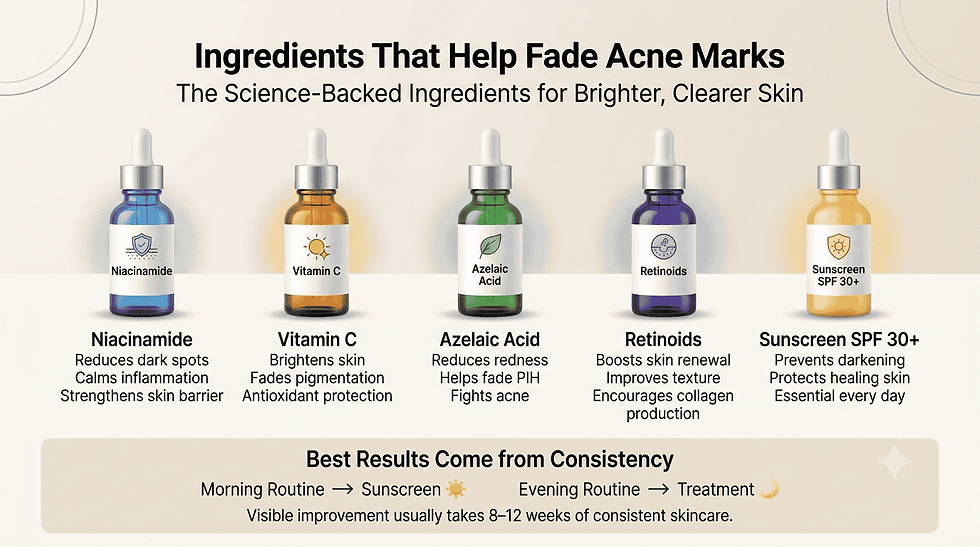
Ingredients That Help Fade Acne Marks
While time plays the biggest role in fading acne marks, certain skincare ingredients can help speed up the process by reducing pigmentation, encouraging cell turnover, and supporting your skin barrier.
The key is consistency—most ingredients take at least 8–12 weeks of regular use before noticeable improvements appear.
1. Niacinamide
Niacinamide (Vitamin B3) is one of the best beginner-friendly ingredients for post-acne marks. It helps reduce excess pigment transfer, calms inflammation, and strengthens the skin barrier.
Benefits include:
Helps fade post-inflammatory hyperpigmentation (PIH)
Reduces redness after breakouts
Controls excess oil production
Supports a healthy skin barrier
Since niacinamide is generally well tolerated, it works well in both morning and evening routines.
2. Vitamin C
Vitamin C is a powerful antioxidant that helps brighten the complexion and reduce dark spots over time. It also protects the skin from environmental damage caused by free radicals.
Regular use may help:
Brighten dull skin
Fade pigmentation
Improve overall skin tone
Support collagen production
Because Vitamin C can be unstable, store it away from heat and direct sunlight.
3. Azelaic Acid
Azelaic acid is an excellent option for people dealing with both acne and acne marks.
It helps by:
Reducing inflammation
Lightening post-acne pigmentation
Preventing clogged pores
Improving uneven skin tone
People with sensitive skin often tolerate azelaic acid better than stronger exfoliating acids.
4. Retinoids
Retinoids increase skin cell turnover, meaning pigmented skin cells are replaced more quickly by newer, healthier ones.
Benefits include:
Faster skin renewal
Reduced acne breakouts
Improved skin texture
Gradual fading of acne marks
Since retinoids can initially cause dryness or irritation, start slowly and always wear sunscreen during the day.
5. Alpha Hydroxy Acids (AHAs)
AHAs such as glycolic acid and lactic acid gently exfoliate the skin's surface, helping remove pigmented cells over time.
They can help:
Improve skin texture
Brighten dull skin
Reduce superficial pigmentation
Enhance the absorption of other skincare products
Avoid over-exfoliating, as this can damage the skin barrier and worsen inflammation.
6. Tranexamic Acid
Tranexamic acid has become increasingly popular for treating stubborn pigmentation.
It works by reducing the pathways that trigger excess melanin production, making it a helpful ingredient for persistent post-inflammatory hyperpigmentation.
7. Sunscreen
Although not a treatment ingredient, sunscreen is arguably the most important product for fading acne marks.
Without daily sun protection, even the best brightening ingredients will have limited results because UV exposure continues stimulating pigment production.
Choose a broad-spectrum sunscreen with SPF 30 or higher and apply it every morning.
Not every ingredient works for every skin type. Learn which ones are most effective in our guide to the Best Ingredients for Acne-Prone Skin.
How Long Do Acne Marks Take to Fade?
One of the most common questions is, "How long until my acne marks disappear?"
Unfortunately, there isn't a single answer because healing depends on several factors, including skin tone, the severity of acne, sun exposure, and your skincare routine.
A general timeline looks like this:
Mild red marks may begin fading within a few weeks.
Brown post-inflammatory hyperpigmentation often takes 2–6 months.
Deeper pigmentation can take 6–12 months or longer.
True acne scars usually require professional treatment and rarely disappear completely on their own.
If you're seeing gradual improvement, even if it's slow, that's a sign your skin is healing.
Common Mistakes That Delay Acne Mark Healing
Many people unknowingly slow down their skin's recovery by making a few common skincare mistakes.
Picking or Popping Pimples
Every time you squeeze a pimple, you increase inflammation and the risk of developing darker, longer-lasting marks—or even permanent scars.
Skipping Sunscreen
UV exposure can darken acne marks significantly. Daily sunscreen is one of the easiest ways to help your skin heal faster.
Using Too Many Active Ingredients
Layering multiple acids, retinoids, exfoliants, and brightening products can irritate your skin rather than help it. Healthy skin heals more efficiently than irritated skin.
Over-Exfoliating
Exfoliation can be beneficial, but excessive exfoliation weakens the skin barrier, increases redness, and prolongs healing.
Expecting Overnight Results
Many skincare products promise quick improvements, but skin biology doesn't work overnight. Even effective products require patience and consistent use.
Still unsure which acne advice to trust? Many popular skincare tips are actually myths that can do more harm than good. Read our 10 Common Acne Myths You Should Stop Believing (Backed by Science) to separate facts from fiction and make informed decisions for healthier, clearer skin.

A Simple Skincare Routine for Acne Marks
You don't need a complicated 10-step routine to support healing.
Morning Routine
Gentle cleanser
Niacinamide or Vitamin C serum
Lightweight moisturizer
Broad-spectrum SPF 30 or higher sunscreen
Evening Routine
Gentle cleanser
Retinoid or azelaic acid (on alternate nights if needed)
Moisturizer
Keeping your routine simple reduces the chance of irritation while allowing active ingredients to work effectively.
Realistic Expectations
One of the hardest parts of treating acne marks is staying patient.
Many people check their skin every day, hoping to see dramatic improvement.
However, skin changes happen gradually. Instead of looking for daily differences, compare photos taken every four to six weeks. This provides a much clearer picture of your progress.
It's also important to remember that everyone's skin heals at a different pace. Genetics, skin tone, hormones, lifestyle, and the severity of acne all influence recovery time.
If your marks are slowly becoming lighter, even if the progress feels minimal, your skin is moving in the right direction.
Frequently Asked Questions
Can acne marks disappear naturally?
Yes. Most post-inflammatory hyperpigmentation (PIH) and post-inflammatory erythema (PIE) gradually fade without treatment, although skincare products and sunscreen can speed up the process.
Do acne scars go away on their own?
True acne scars are different from acne marks. They usually don't disappear completely without professional treatments such as microneedling, laser therapy, or chemical peels.
Which ingredient works best for acne marks?
There isn't a single "best" ingredient. Niacinamide, azelaic acid, Vitamin C, retinoids, and sunscreen all play important roles in fading post-acne pigmentation.
If you are unsure about the best ingredients for your skin pigmentationthen check out our recent post "Best ingredients for hyperpigmentation"
Why do my acne marks get darker after being outside?
Sun exposure stimulates melanin production, making existing pigmentation darker and more noticeable. This is why daily sunscreen is essential.
Can I use makeup while treating acne marks?
Yes. Non-comedogenic makeup won't interfere with healing as long as you remove it thoroughly at the end of the day.
Final Thoughts
Acne marks can test your patience, but understanding why they take so long to fade makes the process less frustrating.
Most post-acne discoloration isn't permanent—it's simply your skin working through its natural healing cycle.
The combination of consistent skincare, daily sun protection, and realistic expectations is far more effective than chasing quick fixes.
Ingredients like niacinamide, azelaic acid, Vitamin C, and retinoids can support your skin's recovery, but no product can completely bypass the time your body needs to heal.
If your marks persist despite several months of proper skincare, or if you notice changes in skin texture that suggest true acne scarring, consulting a dermatologist can help you explore more targeted treatment options.
Remember, healthy skin isn't built overnight. With patience, protection, and consistency, most acne marks become significantly less noticeable over time.
If you're treating acne marks but continue to experience new breakouts, don't miss our article Why Acne Keeps Returning Even After a Routine, where we explore common reasons acne persists and how to build a routine that addresses the root causes.


Comments