Best Skincare Ingredients for Acne-Prone Skin: A Complete Guide to Clearer, Healthier Skin

Updated: Jul 16
Acne is one of the most common skin concerns, affecting teenagers and adults alike. From painful pimples to stubborn blackheads and post-acne marks, finding products that actually work can be frustrating.
With countless skincare ingredients available today, it's easy to feel overwhelmed about what to choose.
The good news is that you don't need a complicated routine to manage acne. A few well-researched ingredients can make a significant difference when used correctly.
The key is understanding how each ingredient works and choosing the ones that match your skin type and acne concerns.
In this guide, we'll explore the best skincare ingredients for acne-prone skin, including salicylic acid, niacinamide, benzoyl peroxide, azelaic acid, and retinoids.
You'll also learn which skin type each ingredient is best suited for and how to incorporate them into your routine safely.

What Makes an Ingredient Effective for Acne?
Acne develops due to a combination of factors, including:
Excess oil production
Clogged pores
Growth of acne-causing bacteria
Inflammation
Hormonal changes
Since acne has multiple causes, different ingredients target different aspects of the condition.
Some unclog pores, others reduce bacteria, while some calm inflammation or fade acne marks. Choosing the right ingredient depends on your skin's specific needs.
1. Salicylic Acid
Salicylic acid is widely considered one of the best ingredients for oily and acne-prone skin. It belongs to the beta hydroxy acid (BHA) family and is unique because it is oil-soluble.
This allows it to penetrate deep into pores and dissolve excess oil, dirt, and dead skin cells.
Unlike physical scrubs, which can be harsh on the skin, salicylic acid provides gentle chemical exfoliation while helping prevent clogged pores.
Benefits of Salicylic Acid
Unclogs blocked pores
Reduces blackheads and whiteheads
Controls excess oil production
Helps prevent future breakouts
Smooths rough skin texture
Improves overall skin clarity
Regular use can also reduce the appearance of enlarged pores by keeping them free of debris.
Best For
Salicylic acid works best for:
Oily skin
Combination skin
Blackheads
Whiteheads
Mild to moderate acne
Not Ideal For
People with very dry or extremely sensitive skin may find frequent use irritating. Starting slowly helps reduce the risk of dryness.
How to Use It
Beginners should start with products containing 0.5% to 2% salicylic acid.
Use it two or three times per week before gradually increasing frequency if your skin tolerates it well.
Always follow with a moisturizer to prevent excessive dryness.

2. Niacinamide
Niacinamide, also known as Vitamin B3, has become one of the most popular skincare ingredients—and for good reason. It supports the skin barrier while helping regulate oil production and reduce redness.
Unlike stronger acne treatments, niacinamide is gentle enough for most skin types and works well alongside other active ingredients.
Benefits of Niacinamide
Reduces excess oil production
Calms redness and irritation
Strengthens the skin barrier
Improves uneven skin tone
Helps fade post-acne marks
Minimizes the appearance of enlarged pores
It also helps the skin retain moisture, making it useful even for people using drying acne treatments.
Best For
Niacinamide is suitable for:
Oily skin
Combination skin
Dry skin
Sensitive skin
Acne-prone skin
Because of its versatility, it's often recommended as a beginner-friendly active ingredient.
How to Use It
Niacinamide can generally be used once or twice daily.
For beginners, products containing 2% to 5% are usually sufficient. Higher concentrations aren't necessarily more effective and may increase the chance of irritation in some people.
3. Benzoyl Peroxide
If your acne consists of red, inflamed pimples rather than blackheads, benzoyl peroxide may be one of the most effective ingredients available without a prescription.
Unlike salicylic acid, which focuses on unclogging pores, benzoyl peroxide targets acne-causing bacteria while also reducing inflammation.
Benefits of Benzoyl Peroxide
Kills acne-causing bacteria
Reduces inflamed pimples
Helps prevent future breakouts
Clears mild to moderate acne
Decreases skin inflammation
Many dermatologists recommend it for inflammatory acne because it works directly against one of acne's primary causes.
Best For
Oily skin
Moderate acne
Inflamed pimples
Recurring breakouts
Possible Side Effects
Benzoyl peroxide may cause:
Dryness
Peeling
Mild irritation
It can also bleach towels, pillowcases, and clothing, so allow it to dry completely before coming into contact with fabrics.
How to Use It
Beginners should start with a 2.5% concentration, as research suggests lower strengths are often just as effective as higher ones while causing less irritation.
Use a thin layer and avoid applying more than directed.
Ingredients like salicylic acid and benzoyl peroxide can be found in both leave-on treatments and facial cleansers. Understanding which cleanser contains these ingredients—and who should use them—can help you build a more effective routine. Learn more in our guide to the best cleansers for acne-prone skin.
4. Azelaic Acid
Azelaic acid is one of the most underrated skincare ingredients for acne-prone skin. It offers multiple benefits without being as irritating as some stronger treatments.
It helps reduce acne while also improving post-inflammatory hyperpigmentation—the dark marks often left behind after pimples heal.
Benefits of Azelaic Acid
Reduces acne breakouts
Calms inflammation
Fades acne marks
Brightens uneven skin tone
Helps reduce redness
Supports smoother-looking skin
Its anti-inflammatory properties also make it a good option for people with sensitive or redness-prone skin.
Best For
Azelaic acid works well for:
Sensitive skin
Acne-prone skin
Combination skin
Dry skin
Skin with acne marks
How to Use It
Beginners can start with a 10% formulation and use it a few evenings each week before gradually increasing frequency.
Even after you get your acne under control, you may still notice dark spots or red marks lingering on your skin. These post-acne marks can take weeks or even months to fade. Learn the science behind the healing process in our guide Why Acne marks Take So Long to Fade.

5. Retinoids
Retinoids are among the most effective long-term treatments for acne because they work by increasing skin cell turnover and preventing pores from becoming clogged.
Instead of treating existing pimples alone, retinoids help stop new acne from forming.
They also improve overall skin texture, making them popular for both acne treatment and anti-aging.
Benefits of Retinoids
Prevent clogged pores
Reduce acne breakouts
Improve uneven texture
Fade acne scars
Support collagen production
Minimize fine lines over time
Common Types
Some commonly used retinoids include:
Retinol
Adapalene
Tretinoin (prescription in many regions)
Retinol is generally the gentlest option for beginners.
Best For
Retinoids are ideal for:
Oily skin
Combination skin
Persistent acne
Acne scars
Adult acne
How to Use Them
Start slowly by applying a pea-sized amount two nights per week.
Always apply retinoids at night and wear sunscreen every morning, as they can make the skin more sensitive to sunlight.
It's normal to experience mild dryness or temporary purging when first introducing a retinoid.
Acne-fighting ingredients work best when combined with healthy daily habits. Discover simple lifestyle and skincare tips in our guide on how to prevent new pimples instead of just treating them.

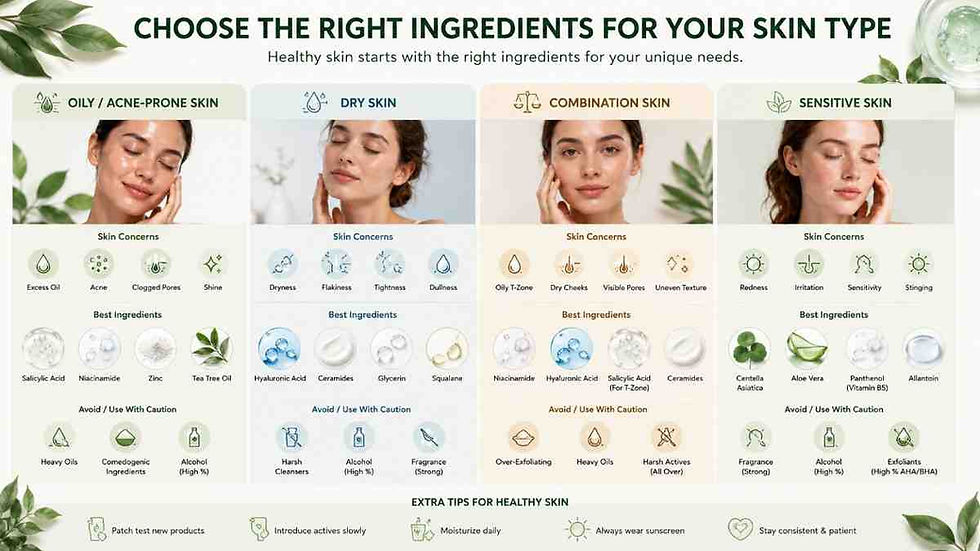
Which Ingredient Is Right for Your Skin Type?
Oily Skin
If your skin becomes shiny quickly or produces excess oil throughout the day, these ingredients are excellent choices:
Salicylic acid
Benzoyl peroxide
Niacinamide
Retinoids
These help control oil while reducing clogged pores and breakouts.
Combination Skin
Combination skin benefits from ingredients that balance oil without drying the skin excessively.
Recommended ingredients include:
Salicylic acid
Niacinamide
Retinoids
Dry Skin
Dry skin needs ingredients that treat acne while maintaining the skin barrier.
Good choices include:
Niacinamide
Azelaic acid
Retinoids and salicylic acid can still be used but should always be paired with a good moisturizer.
Sensitive Skin
People with sensitive skin often experience irritation more easily.
The gentlest options include:
Niacinamide
Azelaic acid
Introduce one active ingredient at a time and avoid using several strong treatments together initially.
Once you've identified the ingredients that suit your skin, the next step is knowing how to use them in the correct order. Our guide on
How to build a skincare routine for acne-prone skin walks you through a simple routine for morning and night.
Can These Ingredients Be Used Together?
Yes, many of these ingredients complement one another when introduced gradually.
A simple beginner routine could look like this:
Morning
Gentle cleanser
Niacinamide serum
Moisturizer
Sunscreen
Evening (Alternate Nights)
Night 1: Salicylic acid + Moisturizer
Night 2: Retinoid + Moisturizer
Night 3: Azelaic acid + Moisturizer
If using benzoyl peroxide, start by using it on separate nights from retinoids unless advised otherwise by a dermatologist.
Still unsure which acne advice to trust? Many popular skincare tips are actually myths that can do more harm than good. Read our 10 Common Acne Myths You Should Stop Believing (Backed by Science) to separate facts from fiction and make informed decisions for healthier, clearer skin.
Common Mistakes to Avoid
Using Too Many Active Ingredients: Applying multiple strong acne treatments together can damage the skin barrier and increase irritation. Introduce one ingredient at a time and monitor how your skin responds.
Skipping Moisturizer: Many people with acne believe moisturizers make breakouts worse. In reality, a lightweight, non-comedogenic moisturizer helps maintain a healthy skin barrier and reduces irritation caused by acne treatments.
Forgetting Sunscreen: Ingredients like retinoids and exfoliating acids can increase sun sensitivity. Daily sunscreen helps protect your skin and prevents acne marks from becoming darker.
Expecting Instant Results: Most acne treatments require consistency. Improvements often take several weeks, and stopping products too early may prevent you from seeing their full benefits.
Ingredients like ceramides, glycerin, and panthenol don't directly treat acne, but they are essential for repairing a damaged skin barrier, which helps reduce irritation and supports the effectiveness of acne treatments. Read our complete guide to repairing your skin barrier to learn how to choose the right barrier-supporting ingredients.
Frequently Asked Questions
Which skincare ingredient is best for acne-prone skin?
There isn't a single best ingredient for everyone. Salicylic acid is excellent for clogged pores, benzoyl peroxide targets acne-causing bacteria, niacinamide reduces oil and redness, azelaic acid helps with acne marks, and retinoids prevent future breakouts. The right choice depends on your skin type and acne concerns.
Can I use niacinamide with salicylic acid?
Yes. These ingredients work well together. Salicylic acid helps keep pores clear, while niacinamide reduces inflammation and supports the skin barrier.
Is benzoyl peroxide stronger than salicylic acid?
They serve different purposes. Benzoyl peroxide is generally more effective for inflamed acne because it targets bacteria, while salicylic acid is better for blackheads, whiteheads, and clogged pores.
Which ingredient helps fade acne marks?
Azelaic acid and retinoids are commonly used to improve post-acne marks and uneven skin tone. Consistent sunscreen use also plays an important role in preventing discoloration from becoming more noticeable.
How long does it take to see results?
Most acne ingredients require several weeks of consistent use before noticeable improvements occur. The exact timeline varies depending on the ingredient, your skin type, and the severity of your acne.
Why You Keep Getting Acne — Learn the most common causes of recurring breakouts and practical ways to prevent them.
Final Thoughts
Choosing the best skincare ingredients for acne-prone skin doesn't have to be complicated. Rather than following every trending product or viral routine, focus on ingredients backed by research and suited to your skin type.
Salicylic acid is an excellent choice for oily skin and clogged pores, while benzoyl peroxide is highly effective for inflamed breakouts.
Niacinamide helps regulate oil production and strengthen the skin barrier, making it suitable for almost every skin type.
Azelaic acid stands out for reducing both acne and post-acne marks, and retinoids remain one of the most effective long-term options for preventing future breakouts and improving overall skin texture.
Remember that healthy skin takes time. Introduce new products gradually, stay consistent with your routine, moisturize regularly, and wear sunscreen every day.
With patience and the right ingredients, achieving clearer, healthier-looking skin is possible.


Comments