Signs Your Skin Barrier Is Damaged: Symptoms, Causes, and How to Repair It

Have you ever started a new skincare routine hoping for clearer skin, only to end up with redness, burning, peeling, and even more breakouts?
If so, your acne products may not actually be the problem—your skin barrier might be.
In recent years, skincare has become more accessible than ever.
With thousands of social media recommendations, viral products, and ingredient-focused routines, it's easy to believe that using more products will lead to better skin.
Unfortunately, many people unknowingly damage their skin by over-exfoliating, layering multiple active ingredients, or using harsh cleansers in an attempt to get rid of acne faster.
The result? A compromised skin barrier that leaves your skin irritated, dehydrated, and more prone to inflammation.
Your skin barrier is your body's first line of defense. It protects your skin from harmful bacteria, pollution, allergens, and moisture loss while helping maintain healthy, balanced skin.
When it's functioning properly, your skin feels comfortable, hydrated, and resilient.
But when it's damaged, even the gentlest skincare products may sting, your face may feel tight after cleansing, and your acne can become more inflamed and difficult to manage.
One of the biggest misconceptions in skincare is that stronger treatments always produce better results. In reality, healthy skin depends on balance. Even the most effective acne ingredients can't perform well if your skin barrier is constantly irritated.
Whether you've noticed persistent redness, flaky patches, increased sensitivity, or breakouts that seem to worsen despite following a skincare routine, learning to recognize the signs of a damaged skin barrier is the first step toward healthier skin.
In this guide, you'll learn what the skin barrier actually is, why it's essential for healthy skin, the common signs that it has been damaged, what causes barrier damage, and the most effective ways to repair it without making acne worse.

What Is the Skin Barrier?
Your skin consists of multiple layers, but the outermost layer—known as the stratum corneum—is commonly referred to as the skin barrier. Although it is incredibly thin, it performs one of the most important jobs in your body.
Dermatologists often compare the skin barrier to a brick wall.
Imagine each skin cell as a brick. These bricks are held together by a mixture of natural lipids, including ceramides, cholesterol, and fatty acids, which act as the mortar between them. Together, they create a strong protective wall that shields your skin from the outside world.
This barrier works around the clock, helping your skin retain moisture while preventing harmful substances from entering. Every day, your skin is exposed to pollution, UV radiation, bacteria, allergens, weather changes, and countless other environmental stressors.
Without a healthy barrier, these irritants can penetrate more easily, leading to inflammation and irritation.
At the same time, the barrier prevents excessive water loss. Scientists refer to this as transepidermal water loss (TEWL). When the barrier becomes damaged, your skin loses moisture more rapidly than it can replace it.
As a result, your face may feel dry, tight, flaky, or rough, even if you're applying moisturizer regularly.
Contrary to popular belief, a damaged skin barrier doesn't only affect people with dry skin. Individuals with oily or acne-prone skin can also experience barrier damage.
In fact, they're often at greater risk because they tend to use stronger cleansers, acne medications, and exfoliating products more frequently.
Why Is the Skin Barrier So Important?
Many people think of the skin barrier as simply another layer of skin, but it's actually a highly sophisticated protective system that influences nearly every aspect of skin health.
When your barrier is healthy, your skin is better able to defend itself against external damage while maintaining optimal hydration. This not only keeps your skin looking smooth and radiant but also allows it to heal more efficiently after irritation, injury, or acne breakouts.
A healthy skin barrier helps to:
Lock moisture into the skin
Prevent dehydration
Reduce sensitivity
Protect against bacteria and environmental pollutants
Support faster wound healing
Maintain a balanced skin microbiome
Improve tolerance to skincare products
Reduce inflammation
Without this protective shield, your skin has to work much harder to defend itself. Even products that were once comfortable to use may suddenly begin to sting or burn.

How Does a Damaged Skin Barrier Affect Acne?
Many people assume that acne develops simply because their skin is dirty or excessively oily. While oil production does play a role, acne is actually a complex condition involving clogged pores, inflammation, bacteria, hormones, and genetics.
This is why simply using stronger acne products doesn't always solve the problem.
In fact, over-treating acne is one of the most common reasons people develop a damaged skin barrier.
For example, someone struggling with breakouts may use a salicylic acid cleanser, a glycolic acid toner, a benzoyl peroxide treatment, and a retinol serum—all within the same routine.
Individually, these ingredients can be highly effective. However, layering them together without allowing the skin to adapt often overwhelms the barrier.
Once the barrier becomes compromised, inflammation increases. Pimples appear redder and more irritated, existing acne takes longer to heal, and new breakouts may develop because the skin is constantly under stress.
Some people also notice that their skin becomes both oily and dehydrated at the same time. This happens because a damaged barrier loses water quickly, while the sebaceous glands may continue producing oil in an attempt to compensate.
If you've been wondering why you're still experiencing breakouts despite following a skincare routine, it's worth considering whether your barrier has become compromised rather than assuming your products simply aren't working.
Related: Why Am I Getting Pimples Even After Following a Skincare Routine? In that guide, we discuss several overlooked reasons why acne can persist even when you're using the "right" products, including the impact of an unhealthy skin barrier.
What Does the Skin Barrier Actually Do?
Understanding the skin barrier becomes much easier once you know its key functions.
1. It Keeps Moisture Inside the Skin
One of the barrier's primary jobs is preventing excessive water loss.
Healthy skin naturally contains water, which keeps it soft, smooth, and flexible. When the barrier is intact, this moisture remains locked inside. When it's damaged, water escapes much more easily, leaving the skin dehydrated and tight.
This is why simply drinking more water won't fix barrier damage. Your skin also needs a healthy outer layer to retain that hydration.
2. It Protects Against Harmful Microorganisms
Your skin is constantly exposed to bacteria, viruses, fungi, and other microorganisms.
Fortunately, not all bacteria are harmful.
In fact, your skin is home to a diverse community of beneficial microbes known as the skin microbiome.
A healthy barrier helps maintain this delicate balance, preventing harmful bacteria from taking over while supporting the beneficial organisms that contribute to healthy skin.
When the barrier is damaged, this balance can be disrupted, increasing the likelihood of irritation and inflammation.
3. It Defends Against Environmental Stressors
Every day, your skin faces challenges such as:
Air pollution
Dust and dirt
Cigarette smoke
Wind
Cold weather
Dry indoor heating
UV radiation
A healthy barrier acts like a shield, reducing the impact of these external stressors. When it's weakened, your skin becomes much more vulnerable to environmental damage.
4. It Supports Skin Repair
Whether you're recovering from an acne breakout, a minor cut, or irritation caused by skincare products, your skin barrier plays an important role in the healing process.
Healthy skin repairs itself more efficiently because the barrier creates an environment where new skin cells can develop properly.
Damaged skin, on the other hand, often heals more slowly, meaning acne marks and irritated spots may linger for longer than expected.

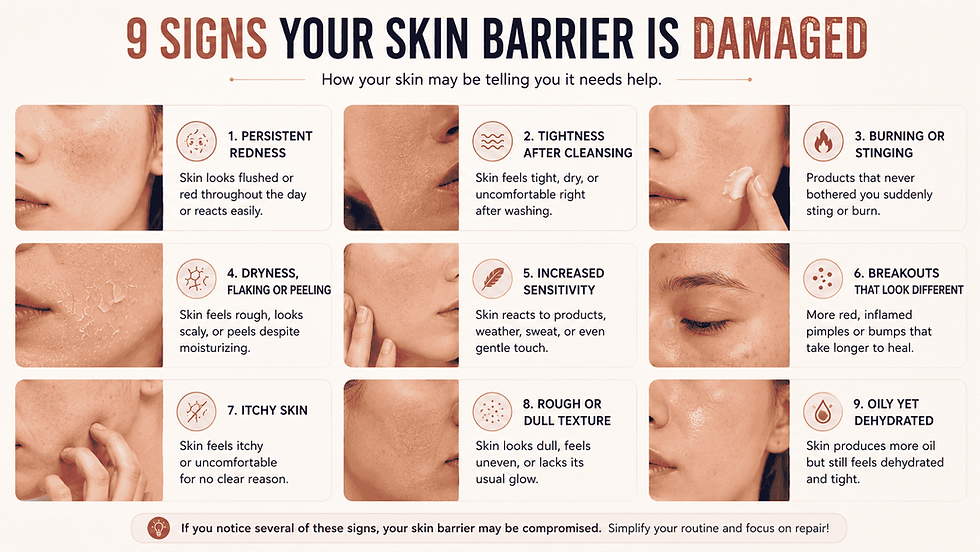
Signs Your Skin Barrier Is Damaged
One of the challenges with a damaged skin barrier is that its symptoms can easily be mistaken for other skin concerns. Many people assume they suddenly have "sensitive skin," an allergy to a product, or worsening acne, when in reality their skin is simply asking for a break.
If you've recently changed your skincare routine, started using new active ingredients, or increased the frequency of exfoliation, pay close attention to how your skin feels—not just how it looks.
Here are the most common signs that your skin barrier may be compromised.
1. Persistent Redness
Occasional redness after exercise or spending time in the sun is normal. However, if your skin stays red throughout the day or flushes easily after applying skincare products, your barrier may be weakened.
When the protective barrier is damaged, irritants penetrate the skin more easily, triggering inflammation. As a result, even products you've used for months without problems may suddenly leave your skin looking red or blotchy.
Redness is particularly common around the cheeks, nose, and chin, but it can appear anywhere on the face.
2. Tightness After Cleansing
Healthy skin shouldn't feel uncomfortably tight after washing.
If your face feels stretched, dry, or uncomfortable immediately after cleansing—even before you've applied any products—it often means your cleanser has removed too much of your skin's natural protective oils.
Many people mistake this "squeaky clean" feeling for cleanliness. In reality, it's often a warning sign that your skin barrier is losing moisture faster than it should.
A gentle cleanser should leave your skin feeling clean, not stripped.
3. Burning or Stinging When Applying Products
One of the clearest signs of barrier damage is when products that never caused irritation suddenly begin to sting.
This can happen with:
Moisturizers
Sunscreens
Serums
Cleansers
Even plain water in severe cases
This doesn't necessarily mean you're allergic to the product. Instead, the tiny gaps in a damaged skin barrier allow ingredients to penetrate more deeply than they normally would, making your skin much more reactive.
4. Dryness That Doesn't Improve Easily
Everyone experiences dry skin occasionally, especially during colder months.
However, if your skin remains dry despite using moisturizer consistently, your barrier may be compromised.
Think of trying to fill a bucket with holes in it. No matter how much water you pour in, it continues leaking out. Similarly, moisturizers can't work effectively if your skin barrier isn't able to retain hydration.
5. Flaking or Peeling Skin
Small flakes around the nose, chin, mouth, or forehead are another common sign.
Many people respond by exfoliating more, believing that the flakes are simply dead skin that needs to be removed.
Unfortunately, this usually makes the problem worse.
When your barrier is damaged, those flakes are actually part of your skin's attempt to repair itself. Removing them aggressively only delays healing.
6. Increased Sensitivity
If your skin suddenly reacts to products, weather changes, sweat, or even gentle touching, it may be a sign that your barrier isn't functioning properly.
Some people notice that spending just a few minutes in the sun causes irritation, while others find that air conditioning or cold weather suddenly makes their skin uncomfortable.
Healthy skin is naturally more resilient.
7. Breakouts That Look Different
One of the biggest misconceptions is that every new bump on your face is caused by clogged pores.
When the barrier is damaged, inflammation increases, which can make existing acne appear much worse.
You may notice:
More red pimples
Small inflamed bumps
Acne that heals slowly
Irritated skin surrounding breakouts
Some people also confuse irritation with acne because both can produce small red bumps.
If your breakouts are accompanied by burning, tightness, or peeling, your skin barrier may be contributing to the problem.
8. Itchy Skin
Although itching is commonly associated with dry skin, it can also indicate a weakened barrier.
As the skin becomes dehydrated and inflamed, nerve endings become more exposed, making the skin feel itchy or uncomfortable.
Resist the urge to scratch, as this can further damage the barrier and introduce bacteria into the skin.
9. A Rough or Dull Texture
Healthy skin reflects light evenly, giving it a naturally smooth appearance.
A damaged barrier often makes skin appear:
Rough
Uneven
Dull
Tired-looking
Even if you're using brightening ingredients like vitamin C, you may not notice much improvement until your skin barrier has recovered.
Can You Have Oily Skin and a Damaged Skin Barrier?
Absolutely.
This surprises many people because oily skin is often associated with having "too much moisture."
In reality, oil and hydration are not the same thing.
Your skin can produce excess oil while still lacking enough water. In fact, when the barrier becomes damaged and water escapes from the skin, your sebaceous glands may respond by producing even more oil in an attempt to compensate.
This creates a frustrating cycle:
Skin becomes dehydrated.
Oil production increases.
More acne treatments are used.
The barrier becomes even weaker.
Skin becomes increasingly oily and irritated.
Breaking this cycle requires focusing on repairing the barrier rather than constantly trying to remove oil.
What Causes a Damaged Skin Barrier?
Skin barrier damage usually doesn't happen overnight. Instead, it's often the result of repeated habits that gradually weaken your skin's natural defenses.
Let's look at the most common causes.
1. Over-Exfoliation
Exfoliation removes dead skin cells and can improve skin texture when done correctly.
However, more is not better.
Using exfoliating acids too frequently—or combining multiple exfoliants in the same routine—can strip away the lipids that hold your skin barrier together.
Common exfoliating ingredients include:
Salicylic acid (BHA)
Glycolic acid (AHA)
Lactic acid (AHA)
Mandelic acid
Physical scrubs
Exfoliating every day isn't necessary for most people, especially if you're already using other active ingredients.
2. Using Too Many Active Ingredients Together
Modern skincare offers many effective ingredients, but combining them without understanding how they interact is one of the biggest reasons barriers become damaged.
For example, using all of the following in one routine may overwhelm your skin:
Retinoids
Benzoyl peroxide
Salicylic acid
Glycolic acid
Vitamin C
Multiple exfoliating toners
Each of these ingredients can be beneficial when used correctly. The problem arises when they're layered together too quickly or used more frequently than your skin can tolerate.
If you're unsure which ingredients are actually helpful for acne, our guide on Best Skincare Ingredients for Acne-Prone Skin explains how each ingredient works and how to use them safely.
3. Harsh Cleansers
Many foaming cleansers create the impression that they're cleaning the skin more effectively.
In reality, some cleansers contain strong surfactants that remove not only dirt and oil but also the protective lipids your barrier needs.
A cleanser should remove excess oil, sunscreen, and impurities without leaving your skin feeling stripped.
If your face feels tight every time you wash it, your cleanser may be too harsh.
A damaged skin barrier often starts with using harsh cleansers or washing your face too frequently. Switching to a gentle cleanser that suits your skin type is one of the simplest ways to support barrier repair. Read our recommendations for the best cleansers for acne-prone skin to find a suitable option.
4. Washing Your Face Too Often
Many people with acne wash their face several times a day, believing it will prevent breakouts.
Unfortunately, excessive cleansing often has the opposite effect.
Overwashing removes natural oils, increases irritation, and weakens the skin barrier.
For most people, washing twice a day—morning and evening—is sufficient.
If you've exercised or sweated heavily, an additional gentle cleanse may be appropriate.
5. Using Very Hot Water
Hot showers may feel relaxing, but they're not particularly kind to your skin.
Very hot water dissolves protective oils much more quickly than lukewarm water, leaving your skin vulnerable to dehydration.
Choosing lukewarm water instead can help preserve your barrier while still cleansing effectively.
6. Environmental Factors
Your skincare routine isn't the only thing affecting your barrier.
External factors such as:
Cold weather
Low humidity
Strong winds
Air pollution
Excessive sun exposure
Indoor heating and air conditioning
can all gradually weaken the skin's protective layer.
During winter or in dry climates, you may notice your skin becoming more sensitive even if you haven't changed your routine.
7. Overusing Acne Treatments
When acne doesn't improve quickly, it's tempting to use stronger products more often.
However, applying benzoyl peroxide multiple times a day or increasing retinoid use before your skin has adapted often leads to irritation instead of faster results.
Acne treatments work best when used consistently and patiently—not aggressively.
Your skin needs time to adjust, and supporting your barrier along the way makes those treatments far more effective in the long run.

How to Repair a Damaged Skin Barrier
The good news is that your skin is remarkably resilient. With the right care, a damaged skin barrier can often recover within 2 to 8 weeks, depending on how severe the damage is. Mild irritation may improve in just a couple of weeks, while more significant damage caused by overusing active ingredients can take longer.
The key is to stop trying to "fix" your skin with more products. Instead, give it the conditions it needs to heal naturally.
Here's a step-by-step approach to repairing your skin barrier.
Step 1: Simplify Your Skincare Routine
When your skin barrier is damaged, less is more. Instead of using multiple serums, exfoliants, and acne treatments, strip your routine back to the essentials.
A simple routine may look like this:
Morning
Gentle cleanser (if needed)
Moisturizer
Broad-spectrum sunscreen (SPF 30 or higher)
Night
Gentle cleanser
Moisturizer
Following a basic routine for a few weeks gives your skin the opportunity to recover without constantly being exposed to potentially irritating ingredients.
Remember, a simple routine is not a step backwards—it is often the fastest route to healthier skin.
Step 2: Choose Ingredients That Support the Skin Barrier
Once you've simplified your routine, focus on ingredients that help restore hydration and strengthen the skin's natural protective layer.
Ceramides
Ceramides are lipids that naturally make up a significant portion of your skin barrier. When the barrier is damaged, ceramide levels can decrease, making it easier for moisture to escape. Using a moisturizer with ceramides helps replenish these lipids and supports barrier repair.
Glycerin
Glycerin is a humectant, meaning it attracts water into the outer layers of the skin. It improves hydration without feeling heavy and works well for almost every skin type, including oily and acne-prone skin.
Hyaluronic Acid
Hyaluronic acid is another excellent humectant that helps the skin hold onto water. While it's often marketed as a miracle ingredient, it works best when paired with a moisturizer that helps seal in the hydration it attracts.
Panthenol (Vitamin B5)
Panthenol is known for its soothing and moisturizing properties. It helps calm irritated skin while supporting the skin's natural healing process, making it particularly useful when your barrier feels inflamed.
Niacinamide
Niacinamide is one of the most versatile skincare ingredients. Research suggests it can help:
Improve the skin barrier
Reduce inflammation
Support ceramide production
Regulate excess oil
Minimize redness
If your skin is very irritated, start with a lower concentration (around 2–5%), as higher concentrations may sting in some individuals.
Many of these ingredients are also beneficial for acne-prone skin. If you're looking for a deeper explanation of how they compare with ingredients like salicylic acid, azelaic acid, and retinoids, read our guide on Best Skincare Ingredients for Acne-Prone Skin.
Step 3: Moisturize Consistently
Many people with oily or acne-prone skin skip moisturizer because they worry it will clog their pores.
In reality, skipping moisturizer can worsen dehydration and delay barrier repair. A well-formulated, non-comedogenic moisturizer helps reduce trenespidermal water loss, keeps your skin comfortable, and creates an environment where healing can take place more effectively.
Apply moisturizer while your skin is still slightly damp after cleansing to help lock in hydration.
Step 4: Wear Sunscreen Every Day
Sun exposure doesn't just increase the risk of skin cancer and premature aging—it also slows down the skin's natural repair processes. If your barrier is already compromised, UV rays can increase inflammation and prolong healing.
Choose a broad-spectrum sunscreen with SPF 30 or higher and apply it every morning, even on cloudy days or when you're indoors near windows.
Step 5: Reintroduce Active Ingredients Slowly
Once your skin no longer feels tight, irritated, or sensitive, you can gradually return to your regular skincare routine.
Avoid introducing several products at once. Instead:
Add one active ingredient at a time.
Use it once or twice a week initially.
Increase frequency only if your skin tolerates it well.
Wait at least one to two weeks before introducing another active ingredient.
This approach makes it easier to identify any product that's causing irritation and reduces the risk of damaging your barrier again.
Step 6: Be Patient
Perhaps the hardest part of barrier repair is accepting that it takes time.
You may not see dramatic improvement after just a few days, but that doesn't mean your routine isn't working. Healthy skin recovers gradually.
Consistency with a gentle routine almost always produces better long-term results than constantly changing products in search of a quick fix.
Products and Ingredients to Temporarily Avoid
While your skin barrier heals, it's wise to reduce or temporarily pause products that are causing significant irritation. This doesn't mean these ingredients are "bad"—many are excellent for acne treatment—but using them on an already compromised barrier can slow recovery.
Strong Exfoliating Acids
Alpha hydroxy acids (AHAs) such as glycolic acid and lactic acid, along with beta hydroxy acids (BHAs) like salicylic acid, are valuable exfoliants.
However, if your skin is burning, peeling, or extremely sensitive, taking a short break from these products may help your barrier recover more quickly.
Retinoids (If They Are Causing Irritation)
Retinoids remain one of the most effective treatments for acne and signs of aging.
That said, if your skin is experiencing severe redness, excessive peeling, or persistent burning, temporarily reducing the frequency—or pausing use under the guidance of a dermatologist—may be appropriate until your barrier improves.
Once your skin has recovered, reintroduce retinoids slowly to reduce the risk of recurring irritation.
Benzoyl Peroxide
Benzoyl peroxide is highly effective against acne-causing bacteria, but it can also be drying.
If it is contributing to significant irritation, consider reducing the frequency of use or pausing it briefly while focusing on barrier repair. If you're using prescription acne treatments, consult your dermatologist before making major changes.
Alcohol-Based Products
Some skincare products contain high amounts of drying alcohols that can increase moisture loss.
If your skin barrier is already compromised, switching to alcohol-free alternatives may help reduce irritation.
Physical Scrubs
Avoid harsh scrubs containing walnut shells, sugar crystals, or other abrasive particles. While they may make your skin feel smooth temporarily, they can create tiny micro-tears and further weaken the barrier.
Fragranced Products (If They Sting)
Fragrance isn't inherently harmful, and many people tolerate it well. However, when your skin barrier is damaged, fragranced products are more likely to cause stinging or irritation. Choosing fragrance-free products during recovery is often the safer option.
Common Mistakes That Slow Skin Barrier Recovery
Even with the best intentions, it's easy to make mistakes that delay healing.
Avoid these common habits:
Continuing to exfoliate because your skin looks flaky.
Adding new products every few days.
Washing your face too frequently.
Using very hot water.
Picking or squeezing pimples.
Skipping moisturizer because your skin feels oily.
Expecting overnight results.
Restarting strong acne treatments too quickly.
One of the biggest mistakes is assuming that irritation means a product is "working." While some active ingredients can cause mild, temporary dryness during the adjustment period, persistent burning, peeling, or pain usually indicates that your skin barrier needs attention.
Frequently Asked Questions
How long does it take to repair a damaged skin barrier?
Mild barrier damage often improves within 2 to 4 weeks, while more severe damage can take 6 to 8 weeks or longer. Consistency with a gentle routine is more important than trying multiple new products.
Can oily skin have a damaged skin barrier?
Yes. Oiliness and hydration are different. Your skin can produce excess oil while still being dehydrated and experiencing barrier damage.
Should I stop all my acne treatments?
Not necessarily. If your treatments are well tolerated, you may be able to continue using them.
However, if they are causing significant irritation, reducing their frequency or taking a temporary break may help your skin recover. If you're using prescription medications, speak with your dermatologist before stopping treatment.
Can a damaged skin barrier cause acne?
A damaged barrier doesn't directly cause acne, but it increases inflammation, delays healing, and makes existing breakouts appear worse. It can also reduce your skin's tolerance to acne treatments.
What's the best moisturizer for a damaged skin barrier?
Look for a fragrance-free, non-comedogenic moisturizer that contains ingredients such as ceramides, glycerin, hyaluronic acid, panthenol, or niacinamide.
Final Thoughts
Healthy skin isn't built by using the strongest products—it's built by protecting the skin's natural defenses.
Your skin barrier works around the clock to keep moisture in, harmful irritants out, and your skin functioning as it should. When it's damaged, even the most expensive serums and acne treatments may struggle to deliver the results you're hoping for.
If your skin feels persistently dry, tight, irritated, or unusually sensitive, don't ignore those signals.
Simplifying your routine, focusing on barrier-supporting ingredients, and giving your skin time to recover can make a remarkable difference—not only in how your skin feels but also in how well it responds to future acne treatments.
Remember, clearer skin isn't about doing more. Often, it's about doing less—and doing it consistently.
Related Articles
If you found this guide helpful, these articles can help you build a skincare routine that supports healthy, acne-prone skin:
How to Build a Skincare Routine for Acne-Prone Skin – Learn how to create a simple, effective routine that treats acne without overwhelming your skin.
Why Acne Marks Take So Long to Fade – Understand the difference between post-inflammatory marks and acne scars, why fading takes time, and what you can do to support the process.
https://www.thequietalchemy.com/post/why-acne-marks-take-so-long-to-fade
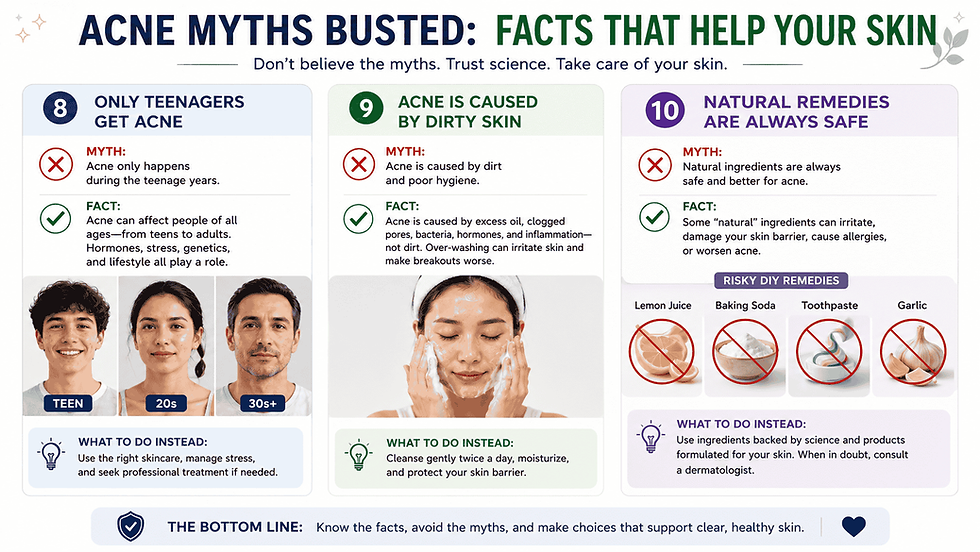
Acne Myths Debunked: Separating Facts from Fiction – Learn which common acne myths are backed by science and which ones could actually be making your breakouts worse.
https://www.thequietalchemy.com/post/10-common-acne-myths-you-should-stop-believing


Comments