Best Ingredients for Hyperpigmentation: 12 Science-Backed Actives That Actually Work (2026)

Updated: 5 days ago
Hyperpigmentation is one of the most common skincare concerns, affecting people of all skin tones and ages. Whether you're dealing with stubborn acne marks, melasma, sunspots, or post-inflammatory dark patches, choosing the right skincare ingredients can make a significant difference.
The challenge is that there isn't one universal "best" ingredient. Vitamin C, niacinamide, azelaic acid, tranexamic acid, retinol, alpha arbutin, and other brightening ingredients all work differently depending on what's causing your pigmentation.
In this comprehensive guide, we'll explain:
What hyperpigmentation is and why it happens
The different types of pigmentation
How brightening ingredients actually work
Which ingredients are best for your specific skin concern
How to build an effective skincare routine
Common mistakes that can make pigmentation worse
By the end, you'll know exactly which ingredients deserve a place in your routine—and which ones don't.
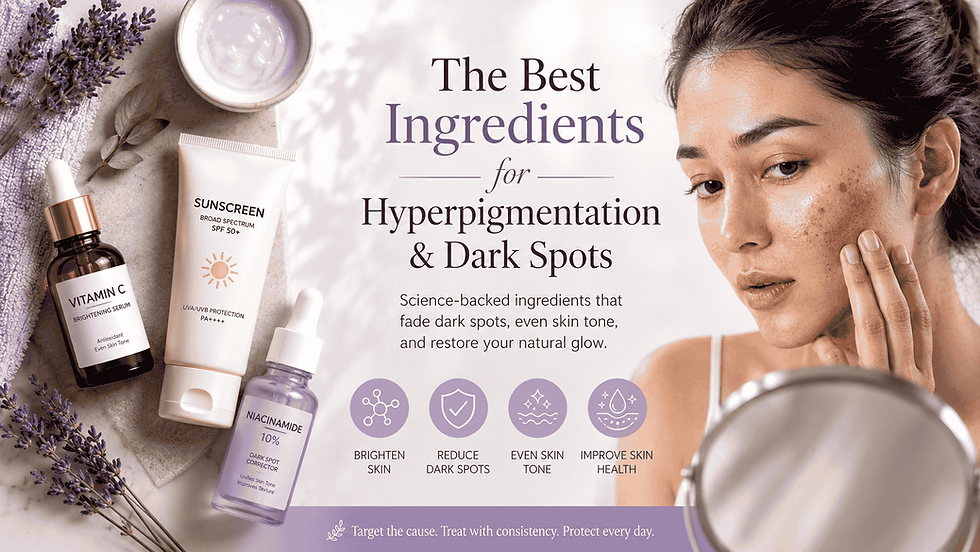
Quick Answer: The best ingredients for hyperpigmentation include vitamin C, niacinamide, azelaic acid, tranexamic acid, alpha arbutin, retinoids, kojic acid, and exfoliating acids like glycolic acid.
However, the most effective ingredient depends on whether your pigmentation is caused by acne, melasma, sun exposure, inflammation, or aging. Consistent use of broad-spectrum sunscreen is essential because even the best skincare ingredients cannot prevent new pigmentation if your skin remains unprotected from UV exposure.
Why Ingredients Matter More Than Expensive Products
Many people spend hundreds of dollars on luxury skincare hoping their dark spots will disappear. In reality, the effectiveness of a product depends far more on its active ingredients than its price tag.
A well-formulated serum containing proven ingredients like niacinamide or azelaic acid often outperforms a much more expensive cream filled primarily with fragrances and botanical extracts.
Think of ingredients as the engine of a car. Beautiful packaging may look appealing, but without an effective engine, the car won't get you very far.
When choosing products for pigmentation, focus on:
Evidence-backed active ingredients
Appropriate ingredient concentrations
Stable formulations
Compatibility with your skin type
Consistent daily use
A Reality Check: No Ingredient Works Overnight
If you've ever searched for "how to remove dark spots in one week," you're not alone. Unfortunately, skincare doesn't work that way.
Pigmentation develops gradually, and it also fades gradually.
Even the most effective ingredients generally require:
6–8 weeks for early improvements
8–12 weeks for noticeable fading
3–6 months for stubborn pigmentation
Longer for deeper melasma or chronic sun damage
Your skin naturally renews itself every few weeks, and reducing excess melanin takes time. Consistency is far more important than using stronger products.
Treating pigmentation is not only about adding another brightening ingredient to your routine. Your everyday skincare habits also matter, from protecting your skin barrier and using sunscreen consistently to avoiding unnecessary irritation. For a broader look at these foundational habits, read our Natural Skincare Guide, which covers 25 simple ways to support healthier, naturally glowing skin.
Sunscreen Is Non-Negotiable
If there's one takeaway from this guide, let it be this:
No brightening ingredient can outperform daily sunscreen.
Ultraviolet (UV) radiation stimulates melanocytes—the pigment-producing cells in your skin—to produce more melanin. Without sun protection, existing pigmentation often becomes darker while new spots continue to form.
Even small amounts of daily sun exposure, such as walking outdoors, driving, or sitting near windows, can slow your progress.
Choose a broad-spectrum sunscreen with SPF 30 or higher every morning, and reapply when spending extended time outdoors.
Think of brightening ingredients as removing unwanted pigment while sunscreen prevents new pigment from forming. They work best together.
What Causes Hyperpigmentation?
Hyperpigmentation occurs when certain areas of the skin produce excess melanin, the natural pigment responsible for skin, hair, and eye color.
Your body creates melanin to protect itself from damage. However, when this protective system becomes overactive, uneven patches or spots may appear.
Several different triggers can activate excess pigment production.
1. Sun Exposure (UV Damage)
Sun exposure is the leading cause of many forms of pigmentation.
Ultraviolet rays stimulate melanocytes to produce additional melanin as a defense mechanism. Over time, repeated exposure leads to uneven pigmentation, freckles becoming darker, and the development of sunspots (solar lentigines).
This is why sunscreen remains the foundation of every pigmentation treatment plan.
2. Acne and Breakouts
After a pimple heals, many people notice a brown, gray, or dark patch left behind.
This is known as post-inflammatory hyperpigmentation (PIH).
Inflammation from acne signals melanocytes to produce extra pigment during healing. The deeper or more inflamed the breakout, the greater the chance of developing lingering dark marks.
Picking or squeezing pimples significantly increases this risk.
3. Hormonal Changes (Melasma)
Melasma appears as symmetrical brown or gray patches, commonly affecting the cheeks, forehead, nose, and upper lip.
It is often triggered by:
Pregnancy
Birth control pills
Hormonal fluctuations
Genetics
Sun exposure
Unlike acne marks, melasma tends to be more stubborn and may require combination treatments or professional care.
4. Skin Inflammation
Any injury or inflammatory skin condition can lead to pigmentation.
Common examples include:
Eczema
Allergic reactions
Burns
Insect bites
Cosmetic procedures
Aggressive exfoliation
When the skin becomes inflamed, pigment-producing cells may respond by producing excess melanin during the healing process.
5. Aging
As we age, years of cumulative UV exposure begin to show.
Age spots, also called liver spots or solar lentigines, become more common after the age of 40, especially on areas frequently exposed to sunlight such as the face, hands, shoulders, and arms.
6. Genetics
Some pigmentation concerns have a strong genetic component.
Freckles, for example, are inherited and become darker with sun exposure. While skincare can reduce their appearance slightly, freckles generally do not disappear permanently because they are part of your skin's natural pigment pattern.
Similarly, some individuals are naturally more prone to developing post-inflammatory hyperpigmentation after even minor skin injuries.
7. Skin Injuries
Cuts, scratches, burns, cosmetic procedures, waxing, laser treatments, and even excessive rubbing can sometimes trigger temporary pigmentation while the skin heals.
Using gentle skincare after procedures and protecting the area from sunlight can help minimize discoloration.

Types of Hyperpigmentation
Not all dark spots are the same.
Understanding the type of pigmentation you have is one of the most important steps in choosing the right treatment.
Post-Inflammatory Hyperpigmentation (PIH)
Appearance: Brown, black, or gray marks left after inflammation.
Common causes:
Acne
Eczema
Burns
Injuries
Picking pimples
Best ingredients:
Azelaic Acid
Niacinamide
Vitamin C
Alpha Arbutin
Retinoids
PIH often responds well to topical skincare, especially when treatment begins early.
Melasma
Melasma causes larger, symmetrical patches rather than individual spots.
It is strongly associated with hormonal changes and sun exposure.
Because melasma often involves deeper pigment, treatment usually requires a combination of sunscreen, topical ingredients, and sometimes prescription medications or in-office procedures.
Best ingredients:
Tranexamic Acid
Azelaic Acid
Vitamin C
Retinoids (under professional guidance)
Sunspots (Solar Lentigines)
These flat brown spots develop after years of cumulative sun exposure.
They typically appear on:
Face
Hands
Shoulders
Chest
Sunspots respond well to ingredients that promote cell turnover and reduce excess pigment.
Best ingredients:
Retinol
Vitamin C
Glycolic Acid
Alpha Arbutin
Age Spots
Age spots are essentially sunspots that become more common with age due to long-term UV exposure.
Despite the name, they are caused more by cumulative sun damage than aging itself.
Treatment is similar to that for sunspots.
Freckles
Freckles are small, inherited pigment spots that often darken during sunny months and lighten slightly during winter.
Unlike other forms of pigmentation, freckles are largely determined by genetics.
While brightening ingredients may reduce their intensity somewhat, they usually cannot remove freckles permanently.

Why Identifying the Type Matters
Many people become frustrated because they buy products based on popular recommendations rather than their specific pigmentation.
For example:
Retinol may work well for sunspots but isn't necessarily the first choice for pregnancy-related melasma.
Azelaic acid is excellent for acne marks and sensitive skin.
Tranexamic acid has become one of the most promising ingredients for stubborn melasma.
Vitamin C helps brighten uneven skin tone while protecting against environmental oxidative stress.
Matching the ingredient to the type of pigmentation dramatically improves your chances of seeing visible results.
How Do Brightening Ingredients Work?
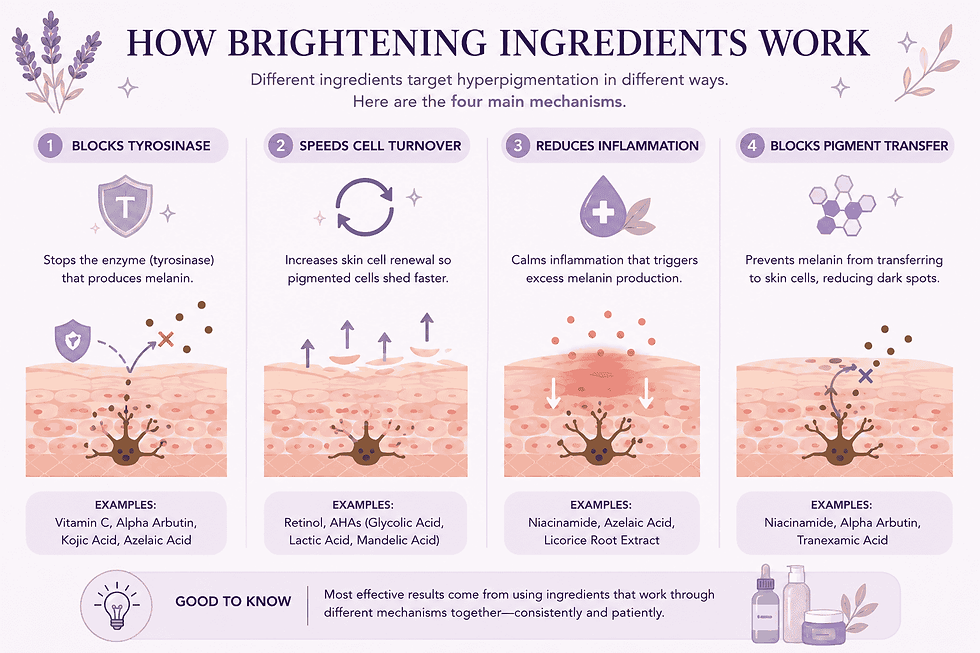
Although different ingredients target pigmentation in different ways, they all aim to reduce excess melanin production or help remove existing pigment more efficiently.
Understanding these mechanisms makes it easier to choose ingredients that complement one another rather than overlap unnecessarily.
1. Tyrosinase Inhibitors
Tyrosinase is a key enzyme involved in melanin production.
Many brightening ingredients work by slowing this enzyme, resulting in less pigment being produced over time.
Examples include:
Alpha Arbutin
Kojic Acid
Vitamin C
Licorice Root Extract
Tranexamic Acid (indirectly)
2. Increasing Cell Turnover
Your skin naturally sheds old cells and replaces them with new ones.
Ingredients that speed up this process help pigmented cells leave the skin surface more quickly.
Examples include:
Retinol
Glycolic Acid
Lactic Acid
Mandelic Acid
These ingredients don't stop melanin production directly but help fade existing discoloration faster.
3. Reducing Inflammation
Inflammation is one of the biggest triggers for post-inflammatory hyperpigmentation.
Some ingredients calm the skin, reducing the signals that stimulate excess pigment production.
Examples include:
Niacinamide
Azelaic Acid
Licorice Root Extract
These are particularly useful for acne-prone and sensitive skin.
4. Fighting Oxidative Stress
Free radicals generated by UV radiation and pollution can contribute to pigmentation.
Antioxidants neutralize these unstable molecules, helping protect skin from further damage.
The most well-known antioxidant for pigmentation is vitamin C, though other plant-derived antioxidants may also support overall skin health.
5. Blocking Pigment Transfer
Some ingredients don't reduce melanin production itself but instead limit the transfer of pigment from melanocytes to surrounding skin cells.
Niacinamide is one of the best-known examples of this mechanism.
This unique action makes it an excellent companion to ingredients that reduce melanin production through other pathways.
What's Next?
Now that you understand what causes hyperpigmentation, how different types of pigmentation develop, and how brightening ingredients work, the next step is choosing the right active ingredient for your specific concern.
In the next section, we'll take an in-depth look at the most effective ingredients for hyperpigmentation—including vitamin C, niacinamide, alpha arbutin, azelaic acid, tranexamic acid, retinol, kojic acid, exfoliating acids, and newer emerging treatments.
For each ingredient, we'll cover how it works, who it's best for, scientific evidence, potential side effects, pregnancy safety, ideal concentrations, layering tips, and realistic timelines for results.
Best Ingredients for Hyperpigmentation
Now that you understand what causes hyperpigmentation and how different brightening ingredients work, it's time to explore the ingredients that dermatologists and skincare experts most commonly recommend.
One important thing to remember is that there isn't a single ingredient that's best for everyone. The right choice depends on the type of pigmentation you have, your skin type, how sensitive your skin is, and whether you're treating acne marks, melasma, sunspots, or general uneven skin tone.
Many people also assume they need to use every brightening ingredient at once, but that's rarely necessary. In fact, introducing one or two well-chosen ingredients consistently often produces better results than layering multiple active ingredients together.
Below are some of the most effective ingredients for fading hyperpigmentation and dark spots.
1. Vitamin C
Vitamin C is one of the most researched ingredients for brightening the skin and reducing hyperpigmentation. It works by slowing down melanin production while also protecting the skin from free radicals generated by UV rays and pollution. Since oxidative stress can worsen pigmentation over time, vitamin C not only helps fade existing dark spots but also helps prevent new ones from forming.
This ingredient is particularly effective for sunspots, mild post-inflammatory hyperpigmentation, and overall dullness. Many people also notice a brighter, more even complexion with regular use.
Vitamin C works best when used every morning under sunscreen. While results won't appear overnight, consistent use for about two to three months often leads to noticeable improvement.
It pairs well with sunscreen, vitamin E, ferulic acid, niacinamide, and hyaluronic acid. If you have sensitive skin, start with a lower concentration to minimize irritation.
If you'd like to learn more about choosing the right formula, concentration, and common mistakes, read our complete guide to Best Vitamin C Serums for Hyperpigmentation.
2. Niacinamide
Niacinamide, a form of vitamin B3, is one of the most beginner-friendly ingredients for treating hyperpigmentation. Instead of directly reducing melanin production, it limits the transfer of pigment into skin cells, helping dark spots gradually fade while strengthening the skin barrier.
Because it also reduces inflammation and regulates excess oil production, niacinamide is an excellent option for people dealing with acne and the dark marks left behind after breakouts.
Unlike many active ingredients, niacinamide is generally well tolerated by most skin types, including sensitive skin. It can easily fit into both morning and evening skincare routines and combines well with most other brightening ingredients.
If you're just starting a pigmentation routine, niacinamide is often one of the safest places to begin.
For a deeper comparison, check out our guide on Niacinamide vs Vitamin C for Dark Spots.
3. Alpha Arbutin
Alpha arbutin has become one of the most popular ingredients for treating stubborn pigmentation because it targets one of the key steps involved in melanin production. By inhibiting the tyrosinase enzyme, it helps gradually reduce excess pigment without being as irritating as stronger prescription treatments.
It works particularly well for post-inflammatory hyperpigmentation, acne marks, and uneven skin tone. While it may not produce dramatic overnight results, many people notice gradual fading after several weeks of consistent use.
One of alpha arbutin's biggest advantages is that it works well alongside other brightening ingredients, making it easy to include in a pigmentation-focused routine.
People with very sensitive skin usually tolerate alpha arbutin well, although sunscreen remains essential for maintaining results.
If you're wondering how it compares with another popular brightening ingredient, read our article on Alpha Arbutin vs Kojic Acid.
4. Azelaic Acid
Azelaic acid is one of the few ingredients that can address several skin concerns at the same time. It helps reduce hyperpigmentation, calms inflammation, unclogs pores, and fights acne-causing bacteria, making it especially useful for people who experience both acne and dark spots.
Dermatologists frequently recommend azelaic acid for post-inflammatory hyperpigmentation because it treats both the cause and the resulting discoloration. It is also commonly used as part of treatment plans for melasma and rosacea.
Compared with stronger exfoliating acids, azelaic acid is generally gentler and suitable for sensitive skin when introduced gradually.
Most people see the best results after consistent use for several months. Because it is well tolerated by many skin types, it has become one of the most trusted ingredients for long-term pigmentation management.
If you're considering adding it to your routine, explore our guide to Best Azelaic Acid Products for Hyperpigmentation.
5. Tranexamic Acid
Tranexamic acid has gained significant attention in recent years as one of the most promising ingredients for treating melasma and stubborn pigmentation. Although it was originally developed for medical purposes unrelated to skincare, researchers discovered that topical tranexamic acid can help reduce abnormal pigment production triggered by inflammation and UV exposure.
It is particularly effective for people whose pigmentation hasn't responded well to traditional brightening ingredients alone.
Tranexamic acid is commonly found in serums designed specifically for uneven skin tone and often works best when paired with ingredients like niacinamide or alpha arbutin.
Because melasma can be persistent and easily triggered by sunlight, sunscreen remains essential even when using tranexamic acid.
6. Retinol
Retinol is best known as an anti-aging ingredient, but it also plays an important role in fading hyperpigmentation. Rather than directly blocking melanin production, retinol speeds up skin cell turnover, helping pigmented skin cells shed more quickly and revealing fresher, more even-toned skin underneath.
It can be particularly effective for sunspots, age spots, and pigmentation associated with photoaging.
However, retinol requires patience. It's common to experience dryness or mild irritation when first starting, so beginners should introduce it slowly and avoid combining it with too many strong exfoliating acids in the same routine.
Retinol should only be used at night and should always be paired with sunscreen during the day because newly renewed skin is more vulnerable to sun damage.
If you're new to this ingredient, our Retinol for Beginners guide explains how to use it safely.
7. Kojic Acid
Kojic acid is another well-known brightening ingredient that works by reducing the activity of tyrosinase, the enzyme responsible for producing melanin.
It has long been used to treat melasma, sunspots, and post-inflammatory hyperpigmentation, especially in combination with other brightening ingredients.
Although kojic acid can be highly effective, it may cause irritation in some individuals, particularly at higher concentrations or when used alongside multiple exfoliating acids.
If you have sensitive skin, it's usually best to introduce kojic acid gradually and monitor your skin's response.
Many modern pigmentation serums combine kojic acid with niacinamide or alpha arbutin to improve effectiveness while minimizing irritation.
8. Glycolic Acid
Glycolic acid is an alpha hydroxy acid (AHA) that helps fade pigmentation by gently exfoliating the surface of the skin. By removing pigmented dead skin cells more quickly, it encourages brighter, smoother skin over time.
Because glycolic acid has one of the smallest molecular sizes among AHAs, it penetrates the skin efficiently and can deliver noticeable improvements in texture and uneven skin tone.
However, this deeper penetration also means it may be too strong for some people, especially those with sensitive skin.
Using glycolic acid once or twice a week is often enough for beginners, while overusing it can damage the skin barrier and actually worsen pigmentation.
9. Mandelic Acid
Mandelic acid is often considered one of the gentlest exfoliating acids available. Since its larger molecular size allows it to penetrate the skin more slowly than glycolic acid, it's less likely to cause irritation.
This makes it an excellent choice for sensitive skin and for people who want the benefits of exfoliation without excessive redness or peeling.
Mandelic acid is especially helpful for acne-prone skin because it can improve both breakouts and the pigmentation left behind after they heal.
Although results may develop more gradually than with stronger acids, many people find mandelic acid easier to tolerate over the long term.
10. Lactic Acid
Lactic acid provides gentle exfoliation while also attracting moisture to the skin, making it particularly suitable for dry or dehydrated skin.
By encouraging healthy skin renewal, it can gradually improve uneven pigmentation while leaving the skin softer and smoother.
Because it's generally less irritating than glycolic acid, lactic acid is often recommended for beginners or those with dry skin who still want the benefits of chemical exfoliation.
When used consistently and combined with sunscreen, it can contribute to a brighter, more even complexion over time.
11. Licorice Root Extract
Licorice root extract is a plant-derived ingredient valued for both its brightening and anti-inflammatory properties.
It contains compounds that help reduce excess melanin production while calming irritated skin, making it especially useful for post-inflammatory hyperpigmentation and redness.
Although it may not be as powerful as prescription treatments, licorice root extract is a great option for people looking for a gentle addition to their skincare routine.
It is commonly included in serums designed for sensitive skin because it supports brightening without causing significant irritation.
12. Cysteamine
Cysteamine is one of the newer ingredients attracting attention in dermatology for treating difficult forms of pigmentation, particularly melasma.
Research suggests it can be highly effective when used correctly, with some studies showing results comparable to established prescription treatments. Unlike many brightening ingredients that require all-day wear, cysteamine products are often designed to remain on the skin for a short period before being washed off.
Some people notice an unpleasant odor during application, but many dermatologists consider this a worthwhile trade-off for its potential benefits.
Because cysteamine is still relatively new in consumer skincare, it's often best used under professional guidance, especially for stubborn or long-standing pigmentation.

Which Ingredient Should You Choose?
If you're feeling overwhelmed by the number of options, remember that you don't need every ingredient to see results.
If you're a beginner, niacinamide or azelaic acid are excellent starting points because they are generally well tolerated and suitable for most skin types.
If your main concern is sun damage and dullness, vitamin C is a great addition to your morning routine.
For stubborn acne marks, ingredients like azelaic acid and alpha arbutin can make a noticeable difference with consistent use.
If you're dealing with melasma, tranexamic acid and azelaic acid are often among the most promising non-prescription ingredients, although persistent cases may require professional treatment.
And if you're targeting both pigmentation and signs of aging, retinol can be a valuable long-term investment when introduced carefully.
No matter which ingredient you choose, remember that consistency, patience, and daily sunscreen matter far more than constantly switching between products. Even the most effective active ingredients typically take several weeks—or even months—to produce visible improvements.
In the next section, we'll compare these ingredients side by side and help you choose the best one based on your skin type, the cause of your pigmentation, and your skincare goals.
Which Ingredient Is Best for Your Skin Concern?
With so many effective ingredients available, choosing the right one can feel overwhelming. While every ingredient discussed above can help improve hyperpigmentation, some are better suited for specific concerns than others.
The key is to choose an ingredient that matches both the cause of your pigmentation and your skin type. Using the right active consistently is usually more effective than switching between multiple products every few weeks.
Here's how to decide.
Best Ingredient for Acne Marks (Post-Inflammatory Hyperpigmentation)
If your dark spots appeared after pimples healed, you're dealing with post-inflammatory hyperpigmentation (PIH). The good news is that this type of pigmentation often responds well to topical skincare.
The best ingredients include azelaic acid, niacinamide, alpha arbutin, and retinol.
Azelaic acid is especially effective because it helps treat acne while also fading the marks left behind. Niacinamide reduces inflammation and supports the skin barrier, while alpha arbutin targets excess melanin production. Retinol can also help by speeding up skin renewal, although beginners should introduce it slowly.
For persistent acne marks, combining two compatible ingredients often produces better results than relying on just one.
Best Ingredient for Melasma
Melasma is one of the most challenging forms of hyperpigmentation because hormones and sun exposure both contribute to its development.
Among over-the-counter ingredients, tranexamic acid has shown particularly promising results. Azelaic acid and vitamin C can also help improve uneven pigmentation, especially when used consistently alongside a broad-spectrum sunscreen.
Because melasma has a high risk of returning, daily sun protection is just as important as the treatment itself. Some people may also benefit from prescription medications or in-office procedures recommended by a dermatologist.
Best Ingredient for Sunspots and Age Spots
Sunspots develop after years of cumulative UV exposure and are one of the most common pigmentation concerns.
The combination of vitamin C in the morning and retinol at night is often recommended because these ingredients work through different mechanisms. Vitamin C helps reduce oxidative stress and brightens the skin, while retinol encourages faster skin renewal.
Adding a gentle exfoliating acid once or twice a week may further improve skin texture and help fade stubborn discoloration.
Best Ingredient for Sensitive Skin
If your skin becomes irritated easily, choosing gentle ingredients is essential. Aggressive exfoliation can damage the skin barrier and actually make pigmentation worse.
For most sensitive skin types, azelaic acid, niacinamide, and licorice root extract are excellent choices because they combine brightening benefits with anti-inflammatory properties.
Introduce only one new active ingredient at a time and allow your skin several weeks to adjust before adding another.
Best Ingredient for Oily and Acne-Prone Skin
People with oily skin often struggle with both active breakouts and the dark marks they leave behind.
Niacinamide is one of the best options because it helps regulate oil production while reducing pigmentation. Azelaic acid is another excellent choice since it can improve acne, redness, and post-inflammatory hyperpigmentation simultaneously.
If your skin tolerates exfoliating acids well, mandelic acid can also be a useful addition because it gently exfoliates while helping prevent clogged pores.
Best Ingredient for Dry Skin
Dry skin needs brightening ingredients that won't further compromise the skin barrier.
Vitamin C, lactic acid, niacinamide, and alpha arbutin are generally well suited for dry skin when paired with a nourishing moisturizer.
Avoid over-exfoliating, as excessive dryness can increase irritation and slow the skin's natural healing process.
Best Ingredient for Darker Skin Tones
People with medium to deep skin tones are more prone to developing post-inflammatory hyperpigmentation because their melanocytes respond more strongly to inflammation.
Gentle, consistent treatment is usually more effective than aggressive exfoliation.
Ingredients such as azelaic acid, niacinamide, tranexamic acid, and alpha arbutin are commonly recommended because they help reduce pigmentation without causing unnecessary irritation.
Avoid picking at acne, using harsh scrubs, or overusing exfoliating acids, as these habits can worsen discoloration.
Best Ingredient for Beginners
If you're completely new to skincare, there's no need to build a complicated routine.
Start with one brightening ingredient, a moisturizer, and a sunscreen.
Niacinamide is usually the easiest ingredient for beginners because it's well tolerated by most skin types and pairs well with many other active ingredients. Azelaic acid is another beginner-friendly option, particularly for acne-prone or sensitive skin.
Once your skin has adjusted, you can consider adding another ingredient if needed.

Which Ingredient Works the Fastest?
Everyone wants fast results, but skincare requires patience.
Some ingredients may begin improving overall skin brightness within a few weeks, but noticeable fading of hyperpigmentation typically takes 8 to 12 weeks of consistent use.
Professional treatments generally produce faster results than over-the-counter skincare, but they also come with higher costs and may not be necessary for mild pigmentation.
Rather than searching for the fastest ingredient, focus on using the right ingredient consistently while protecting your skin from the sun every day.
Can You Combine Multiple Ingredients?
Yes—but strategically.
Many ingredients actually complement one another and target pigmentation through different pathways. For example, vitamin C helps reduce melanin production and protects against oxidative stress, while niacinamide limits pigment transfer and strengthens the skin barrier.
However, adding too many active ingredients at once can overwhelm the skin, increase irritation, and slow your progress.
Building your routine gradually is almost always the better approach.
Ingredients That Work Better Together
While each brightening ingredient can be effective on its own, certain combinations work even better because they target hyperpigmentation in different ways. Instead of relying on a single ingredient, these pairings help address multiple causes of dark spots, often leading to better long-term results.
That said, more isn't always better. Using too many active ingredients at once can irritate the skin and delay progress. The goal is to create a balanced routine, not the most complicated one.
Here are some of the best ingredient combinations for fading hyperpigmentation.
Vitamin C + Sunscreen
If you only make one change to your skincare routine, let it be this combination.
Vitamin C helps reduce oxidative stress caused by UV rays and environmental pollution while gradually brightening existing pigmentation. Sunscreen protects your skin from new UV damage and prevents dark spots from becoming darker.
Together, they work as both treatment and prevention.
This combination is especially beneficial for sunspots, dullness, and preventing future pigmentation.
Niacinamide + Alpha Arbutin
Niacinamide and alpha arbutin are often paired in pigmentation serums because they target dark spots in different ways.
Niacinamide helps reduce the transfer of pigment into skin cells while strengthening the skin barrier. Alpha arbutin slows excess melanin production by inhibiting tyrosinase.
Together, they create a gentle but effective combination suitable for most skin types, including beginners.
This pairing is ideal for acne marks, uneven skin tone, and mild hyperpigmentation.
Azelaic Acid + Niacinamide
This combination is particularly helpful for people with acne-prone skin.
Azelaic acid reduces inflammation, treats acne, and fades post-inflammatory hyperpigmentation, while niacinamide helps regulate oil production and strengthens the skin barrier.
Used consistently, they can improve both active breakouts and the dark spots left behind after they heal.
Tranexamic Acid + Alpha Arbutin
For stubborn pigmentation, especially melasma, this pairing has become increasingly popular.
Tranexamic acid helps reduce abnormal pigment production triggered by inflammation, while alpha arbutin targets melanin formation through a different pathway.
Although results take time, many people find this combination effective for persistent discoloration when paired with diligent sun protection.
Retinol + Niacinamide
Retinol can sometimes cause dryness and irritation, particularly during the first few weeks of use.
Niacinamide complements retinol by supporting the skin barrier and reducing irritation while retinol accelerates skin renewal.
This makes the combination suitable for people who want to treat both pigmentation and early signs of aging.
Vitamin C + Ferulic Acid + Vitamin E
This classic antioxidant combination is commonly found in high-quality vitamin C serums.
Ferulic acid helps stabilize vitamin C, while vitamin E enhances its antioxidant activity. Together, they provide better protection against environmental damage and improve overall brightening benefits.

Ingredients You Shouldn't Layer Together
Not every skincare ingredient belongs in the same routine.
Although many modern formulations are designed to work together safely, combining too many strong actives at once may increase irritation without improving results.
Here are a few combinations to approach carefully.
Retinol + Strong Exfoliating Acids
Retinol already speeds up skin cell turnover.
Using it in the same routine as glycolic acid or other strong exfoliating acids may increase redness, peeling, dryness, and irritation.
Instead, use them on alternate nights if your skin tolerates both.
Multiple Exfoliating Acids
Using glycolic acid, lactic acid, mandelic acid, and other exfoliating acids together usually provides little additional benefit while increasing the risk of damaging your skin barrier.
Choose one exfoliating acid based on your skin type instead of layering several.
Too Many Active Ingredients at Once
It's tempting to use vitamin C, niacinamide, retinol, azelaic acid, alpha arbutin, tranexamic acid, glycolic acid, and kojic acid all together in hopes of faster results.
Unfortunately, your skin doesn't work that way.
Introducing several new active ingredients simultaneously makes it difficult to identify what's helping, what's irritating your skin, and which product may be causing breakouts.
Start with one active ingredient, allow your skin to adjust, then slowly introduce additional products if needed.
Can You Use Vitamin C and Niacinamide Together?
Yes.
This is one of the biggest skincare myths.
Older studies suggested these ingredients shouldn't be combined, but modern formulations are stable and can be safely used together by most people.
In fact, many skincare products now include both ingredients because they complement each other well.

How Long Does It Take to See Results?
One of the biggest reasons people give up on skincare is unrealistic expectations.
Hyperpigmentation develops gradually, so it also fades gradually.
While some ingredients may brighten the skin within a few weeks, noticeable fading of dark spots usually takes several months of consistent use.
As a general guideline:
Vitamin C: Around 8–12 weeks
Niacinamide: Around 6–12 weeks
Alpha Arbutin: Around 8–12 weeks
Azelaic Acid: Around 8–16 weeks
Tranexamic Acid: Around 8–16 weeks
Retinol: Around 12–24 weeks
Exfoliating acids: Several weeks for brighter skin, with pigmentation improving gradually over continued use
These timelines vary depending on the depth of pigmentation, skin type, consistency, and sun protection.
Are These Ingredients Safe During Pregnancy?
Pregnancy often triggers hormonal pigmentation such as melasma, but not every brightening ingredient is considered appropriate during this time.
Generally considered compatible with pregnancy include:
Niacinamide
Vitamin C
Azelaic acid (commonly recommended by dermatologists and obstetric providers)
For ingredients such as alpha arbutin, kojic acid, tranexamic acid, and cysteamine, safety data is more limited. It's best to discuss their use with your healthcare provider before including them in your routine.
Retinoids, including retinol, should generally be avoided during pregnancy unless specifically advised otherwise by a qualified healthcare professional.
Whenever you're pregnant or breastfeeding, consult your dermatologist or obstetric provider before starting new skincare treatments.
Common Mistakes That Make Hyperpigmentation Worse
Even the best skincare ingredients won't deliver good results if certain habits continue to trigger excess pigmentation.
Skipping Sunscreen
This is by far the most common mistake.
Without daily sunscreen, UV exposure continues stimulating melanin production, making existing dark spots darker and slowing the effectiveness of your skincare routine.
Picking Pimples
Squeezing or picking acne increases inflammation and significantly raises the risk of post-inflammatory hyperpigmentation.
Treat acne early and allow blemishes to heal naturally whenever possible.
Over-Exfoliating
Using exfoliating acids every day or scrubbing your skin aggressively can damage the skin barrier and trigger additional inflammation.
More exfoliation does not mean faster results.
Expecting Overnight Results
Many people stop using products after only two or three weeks because they don't see dramatic changes.
Most pigmentation treatments require at least two to three months of consistent use before noticeable improvements become visible.
Patience is one of the most important parts of treating hyperpigmentation.
Using Too Many Products
Adding multiple new serums at once often causes irritation and confusion.
A simple routine built around one or two well-chosen ingredients is usually more effective than a complicated ten-step routine.
Sample Skincare Routine for Hyperpigmentation
A consistent routine doesn't have to be complicated.
Morning Routine
Gentle cleanser
Vitamin C serum
Moisturizer
Broad-spectrum sunscreen (SPF 30 or higher)
Evening Routine
Gentle cleanser
Niacinamide or Alpha Arbutin serum
Moisturizer
Alternative Night Routine
If you're using retinol, replace your evening treatment with retinol two or three nights a week before gradually increasing frequency as your skin adjusts.
On the remaining nights, focus on hydration and barrier repair.
A simple, consistent routine followed every day will almost always outperform an overly complicated routine that's difficult to maintain.
Dermatologist Tips for Treating Hyperpigmentation
Although many cases of hyperpigmentation can be improved with over-the-counter skincare, dermatologists agree that successful treatment depends on consistency, patience, and protecting your skin from further damage. These expert-backed recommendations can help you get the most out of your skincare routine.
Wear Sunscreen Every Single Day
If you're investing in brightening serums but skipping sunscreen, you're making your job much harder.
Daily use of a broad-spectrum sunscreen with at least SPF 30 helps prevent UV rays from triggering more melanin production. It also protects the progress you're making with ingredients like vitamin C, niacinamide, and retinol.
Remember that sunscreen isn't just for sunny days. UV rays can still reach your skin through clouds and windows.
Treat Acne Early
If you're prone to breakouts, don't wait until acne leaves dark marks behind.
The sooner you control inflammation, the lower your risk of developing post-inflammatory hyperpigmentation (PIH). Managing acne effectively is often easier than treating the pigmentation it leaves behind.
Introduce One Active Ingredient at a Time
Starting five new products in the same week makes it difficult to know what's working—or what's causing irritation.
Instead, introduce one new active ingredient every few weeks. This gives your skin time to adjust and allows you to identify any product that doesn't suit your skin.
Focus on Consistency Instead of Strength
Many people assume stronger products work faster, but that's not always true.
A gentle ingredient used consistently for three months is usually more effective than a strong ingredient used inconsistently because it causes irritation.
Healthy skin responds better to regular care than aggressive treatments.
Don't Ignore Your Skin Barrier
A damaged skin barrier can make hyperpigmentation more difficult to treat.
If your skin feels tight, burns when applying products, or becomes excessively dry, simplify your routine. Use a gentle cleanser, moisturizer, and sunscreen until your skin recovers before reintroducing active ingredients.
See a Dermatologist for Stubborn Pigmentation
If you've been using brightening ingredients consistently for several months with little improvement, professional treatment may be the next step.
Dermatologists can recommend prescription creams, chemical peels, laser treatments, or other procedures depending on the type and depth of pigmentation.
When Should You See a Dermatologist?
While many forms of hyperpigmentation improve with skincare, there are situations where professional evaluation is important.
Consider seeing a dermatologist if:
Your pigmentation appeared suddenly without an obvious cause.
Dark patches continue to spread rapidly.
Your pigmentation hasn't improved after three to six months of consistent skincare.
You're unsure whether the spot is actually hyperpigmentation or another skin condition.
A mole or pigmented lesion changes in size, shape, color, or starts bleeding.
You have severe melasma that's affecting your confidence or quality of life.
Early diagnosis can help rule out more serious skin conditions and ensure you're using the most appropriate treatment.
Frequently Asked Questions
What is the most effective ingredient for hyperpigmentation?
There isn't one ingredient that's best for everyone. Vitamin C, niacinamide, azelaic acid, tranexamic acid, alpha arbutin, and retinol are all effective, but the right choice depends on what's causing your pigmentation.
Which ingredient works the fastest?
Professional treatments generally work faster than over-the-counter skincare. Among topical ingredients, retinoids, azelaic acid, and tranexamic acid can produce noticeable improvements over time, but most people still need several weeks to months of consistent use.
Is niacinamide or vitamin C better for dark spots?
Both are excellent ingredients, but they work differently.
Vitamin C helps reduce melanin production while protecting the skin from environmental damage. Niacinamide reduces pigment transfer and strengthens the skin barrier.
Many people use both together for better results.
Does retinol remove dark spots?
Retinol doesn't directly remove pigment, but it speeds up skin cell turnover, allowing pigmented skin cells to shed more quickly.
With regular use, it can significantly improve sunspots, acne marks, and uneven skin tone.
Can hyperpigmentation disappear naturally?
Some mild post-inflammatory hyperpigmentation fades on its own over time, especially if the skin is protected from the sun.
However, deeper pigmentation such as melasma or long-standing sunspots often requires treatment to improve.
Which ingredient is best for melasma?
Tranexamic acid and azelaic acid are among the most promising non-prescription ingredients for melasma.
Persistent cases may require prescription medications or in-office treatments recommended by a dermatologist.
Can I use vitamin C and niacinamide together?
Yes.
This combination is considered safe in modern skincare formulations and is commonly recommended because the two ingredients complement each other.
Which acid is best for pigmentation?
There isn't one answer for everyone.
Azelaic acid is excellent for acne marks and sensitive skin, glycolic acid works well for sun damage and uneven texture, while mandelic acid and lactic acid provide gentler exfoliation.
Is alpha arbutin safe for daily use?
Most people can use alpha arbutin once or twice daily, depending on the product's instructions.
Like all brightening ingredients, it works best when paired with sunscreen.
How long does it take to fade dark spots?
Most people begin noticing improvements within 8 to 12 weeks, although stubborn pigmentation may require several months of consistent treatment.
Can I use multiple brightening ingredients together?
Yes, but introduce them gradually.
Using too many active ingredients at once can irritate the skin and slow your progress. A simple routine is often the most effective.
Do natural ingredients work for hyperpigmentation?
Some natural ingredients, such as licorice root extract, may help brighten the skin. However, the strongest scientific evidence currently supports ingredients like vitamin C, niacinamide, azelaic acid, tranexamic acid, retinoids, and alpha arbutin.
Final Verdict: Which Ingredient Is Best?
The truth is that there isn't a single "best" ingredient for hyperpigmentation. The most effective choice depends on the type of pigmentation you're treating, your skin type, and your overall skincare goals.
If you're dealing with acne marks, azelaic acid and niacinamide are excellent starting points because they help treat both inflammation and the resulting pigmentation.
For melasma, tranexamic acid and azelaic acid have shown particularly promising results, although persistent cases may require professional treatment.
If you're new to brightening skincare, niacinamide is one of the easiest ingredients to incorporate into your routine due to its gentle nature and compatibility with most skin types.
People with sensitive skin often do well with azelaic acid, niacinamide, or licorice root extract, while those targeting sunspots and signs of aging may benefit from combining vitamin C in the morning with retinol at night.
Ultimately, no skincare ingredient can replace patience and consistency. Hyperpigmentation develops over time, and it also fades over time. The best results come from using evidence-backed ingredients regularly, protecting your skin with sunscreen every day, and avoiding habits that trigger further pigmentation.
Instead of chasing quick fixes or constantly switching products, build a simple routine that you can follow consistently. Your skin is far more likely to reward steady care than occasional bursts of intensive treatment.
Related Articles
If you're building a skincare routine for hyperpigmentation, these guides can help you choose the right products and ingredients:
How to Fade Acne Marks and Dark Spots Naturally and Medically
Niacinamide vs Vitamin C: Which Is Better for Dark Spots?
How Long Do Acne Marks Take to Fade?
https://www.thequietalchemy.com/post/why-acne-marks-take-so-long-to-fade
Common Mistakes That Make Hyperpigmentation Worse
Best Sunscreens for Hyperpigmentation
Best Vitamin C Serums for Hyperpigmentation
Best Niacinamide Serums for Hyperpigmentation
Best Azelaic Acid Products
Retinol for Beginners
Alpha Arbutin vs Kojic Acid
Morning vs Night Skincare Routine for Hyperpigmentation
Whether you're just starting your skincare journey or looking to refine your routine, understanding your skin and choosing the right ingredients is the first step toward achieving a healthier, more even complexion.


Comments