Common Mistakes That Make Hyperpigmentation Worse (And How to Avoid Them)

Updated: Sep 3
Introduction
You've finally invested in a vitamin C serum, bought sunscreen, and started a skincare routine. Yet weeks or even months later, your dark spots still look exactly the same—or worse, they've become darker.
If you've been wondering, "Why is my hyperpigmentation getting darker instead of fading?", you're not alone.
The truth is that treating hyperpigmentation isn't only about using the right products. Many people unknowingly make everyday skincare mistakes that continuously trigger excess melanin production, preventing dark spots from fading.
Whether you're dealing with acne marks, sun spots, melasma, or post-inflammatory hyperpigmentation (PIH), avoiding these common mistakes can make a noticeable difference.
In this guide, you'll learn the most common mistakes that make hyperpigmentation worse and discover simple ways to help your skin heal more effectively.

What Is Hyperpigmentation?
Hyperpigmentation occurs when certain areas of the skin produce more melanin than usual, making them appear darker than the surrounding skin.
Common types include:
Post-inflammatory hyperpigmentation (PIH)
Sun spots (age spots)
Melasma
Freckles
Although each type has different causes, many everyday habits can make all of them worse.
1. Skipping Sunscreen
This is easily the biggest mistake.
Even if you're indoors most of the day, UV rays can still reach your skin through windows. Sun exposure tells your skin to produce more melanin, making existing pigmentation darker and slowing down fading.
Many people spend money on brightening serums while forgetting sunscreen, which essentially cancels out much of their progress.
What to do instead
Wear a broad-spectrum SPF 30 or higher every day.
Reapply every two hours when outdoors.
Use hats and sunglasses during prolonged sun exposure.
Daily sun protection is one of the fastest ways to help fade hyperpigmentation over time.

2. Picking Pimples and Scabs
If you're constantly touching your acne, you're increasing your chances of developing post-inflammatory hyperpigmentation.
Every time you squeeze a pimple, your skin experiences additional trauma. This triggers inflammation, which signals pigment-producing cells to create more melanin.
The result?
Darker acne marks that can linger for months.
Instead:
Let pimples heal naturally.
Use hydrocolloid patches.
Treat acne early to prevent future marks.
Learning how to prevent dark spots after acne begins with keeping your hands away from your face.

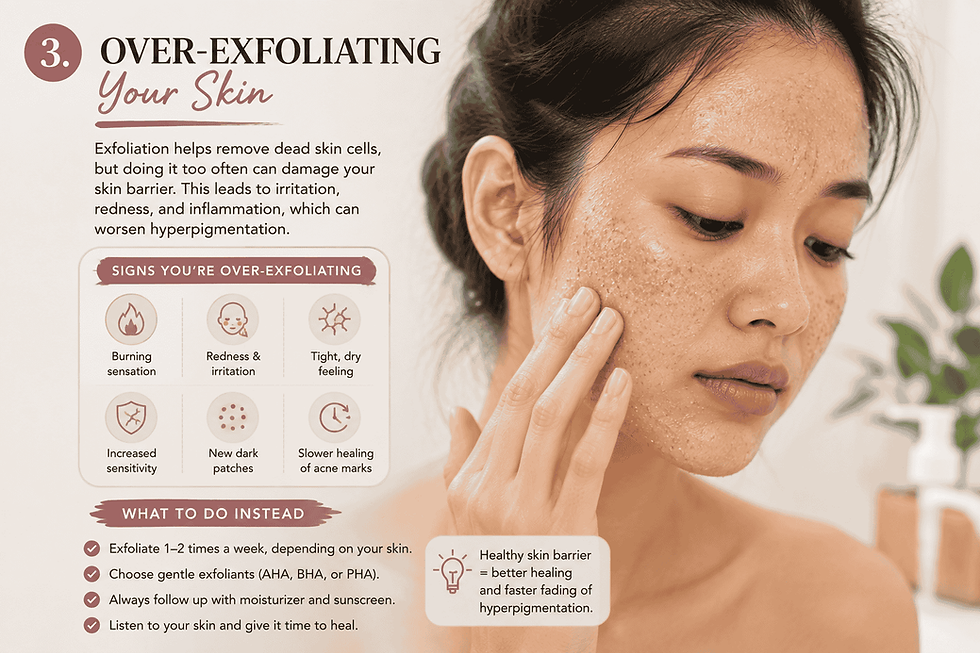
3. Over-Exfoliating Your Skin
Exfoliation helps remove dead skin cells, but too much can damage your skin barrier.
Many people think:
"If exfoliating twice a week helps, doing it every day must work even better."
Unfortunately, that's not how skin works.
Over-exfoliation causes irritation, redness, and inflammation—all of which can worsen pigmentation.
Signs you're exfoliating too much include:
Burning
Redness
Tight skin
Increased sensitivity
New dark patches
Instead of speeding up results, aggressive exfoliation often delays them.
4. Using Too Many Active Ingredients Together
Retinol.
Vitamin C.
Glycolic acid.
Salicylic acid.
Niacinamide.
Azelaic acid.
These ingredients can all benefit hyperpigmentation—but using them all at once often irritates the skin.
A damaged skin barrier can trigger more inflammation, making pigmentation harder to treat.
A simple routine often works better than an overly complicated one.
For most beginners:
Morning:
Gentle cleanser
Vitamin C
Moisturizer
Sunscreen
Night:
Gentle cleanser
Retinol or azelaic acid (alternate if needed)
Moisturizer
Consistency beats complexity.
Not sure whether niacinamide or vitamin C is better for stubborn pigmentation? Our guide to [niacinamide vs vitamin C for dark spots] breaks down how each ingredient works, which skin types they suit, and whether you can use them together.

5. Not Moisturizing Enough
Many people with oily or acne-prone skin avoid moisturizers because they fear breakouts.
However, dehydrated skin heals more slowly.
A healthy skin barrier reduces irritation, allowing pigmentation to fade more effectively.
Look for moisturizers containing:
Ceramides
Glycerin
Hyaluronic acid
Panthenol
Healthy skin recovers faster from inflammation.
6. Expecting Overnight Results
One of the biggest reasons people give up is unrealistic expectations.
Dark spots rarely disappear within a week.
Most forms of post-inflammatory hyperpigmentation require:
6–12 weeks for mild pigmentation
Several months for deeper pigmentation
Longer for melasma
Switching products every two weeks usually prevents you from knowing what's actually working.
Patience is one of the most underrated treatments.
7. Ignoring the Cause of Hyperpigmentation
Many people only treat the spots without addressing what keeps causing them.
For example:
If acne continues to appear every week, new pigmentation will keep replacing old spots.
Similarly:
Hormonal acne
Excessive sun exposure
Skin irritation
Allergic reactions
can all continue creating new dark marks.
Treating the underlying cause is just as important as treating the pigmentation itself.
Adding multiple brightening ingredients without understanding how they work can increase irritation. Before choosing between two popular pigmentation ingredients, learn how alpha arbutin and kojic acid compare.
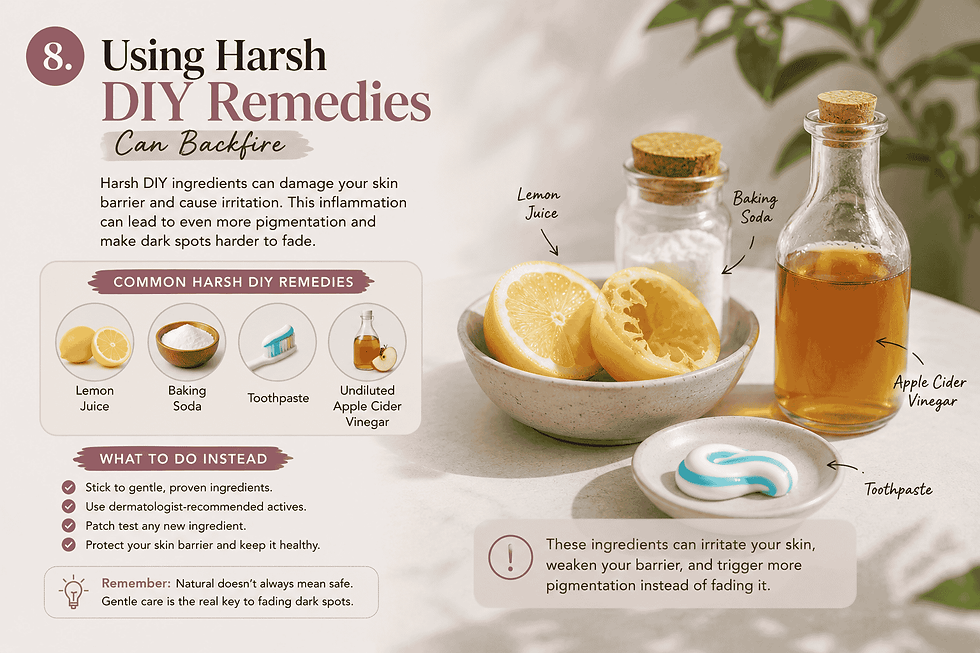
8. Using Harsh DIY Remedies
The internet is full of home remedies claiming to erase dark spots overnight.
Some popular examples include:
Lemon juice
Baking soda
Toothpaste
Undiluted apple cider vinegar
These ingredients can damage your skin barrier and increase irritation.
Ironically, the irritation they cause can create even more pigmentation.
Natural doesn't automatically mean safe.
If you enjoy DIY skincare, stick to gentle, evidence-informed ingredients rather than harsh acids from the kitchen.
9. Not Reapplying Sunscreen
Applying sunscreen once in the morning isn't enough if you're spending hours outdoors.
Sweat, oil, and friction gradually reduce sunscreen protection.
If UV rays continue reaching your skin, melanin production continues too.
Remember:
The best sunscreen is the one you actually apply consistently—and reapply when needed.
10. Being Inconsistent With Your Routine
Many people use their skincare products like this:
Three days on.
Five days off.
One week consistent.
Then nothing for another month.
Pigmentation responds to consistency, not occasional effort.
Even the most effective ingredients need regular use.
Whether you're using:
Vitamin C
Niacinamide
Retinoids
Azelaic acid
Tranexamic acid
consistent application is what delivers gradual improvements.
11. Comparing Your Results to Someone Else's
Everyone's pigmentation heals differently.
Several factors influence recovery:
Skin tone
Genetics
Age
Sun exposure
Hormones
Skin type
Depth of pigmentation
Some people notice fading within weeks.
Others need several months.
Comparing your progress with someone else's can create unnecessary frustration.
Focus on improving your own skin rather than matching someone else's timeline.
Bonus Tips to Fade Hyperpigmentation Faster
If you're wondering how to fade hyperpigmentation faster, these habits can support your skincare routine:
Wear sunscreen every single day.
Be gentle with your skin.
Moisturize consistently.
Avoid picking acne.
Introduce active ingredients gradually.
Stay patient and consistent.
Protect your skin from unnecessary irritation.
Small daily habits often make a bigger difference than expensive products.

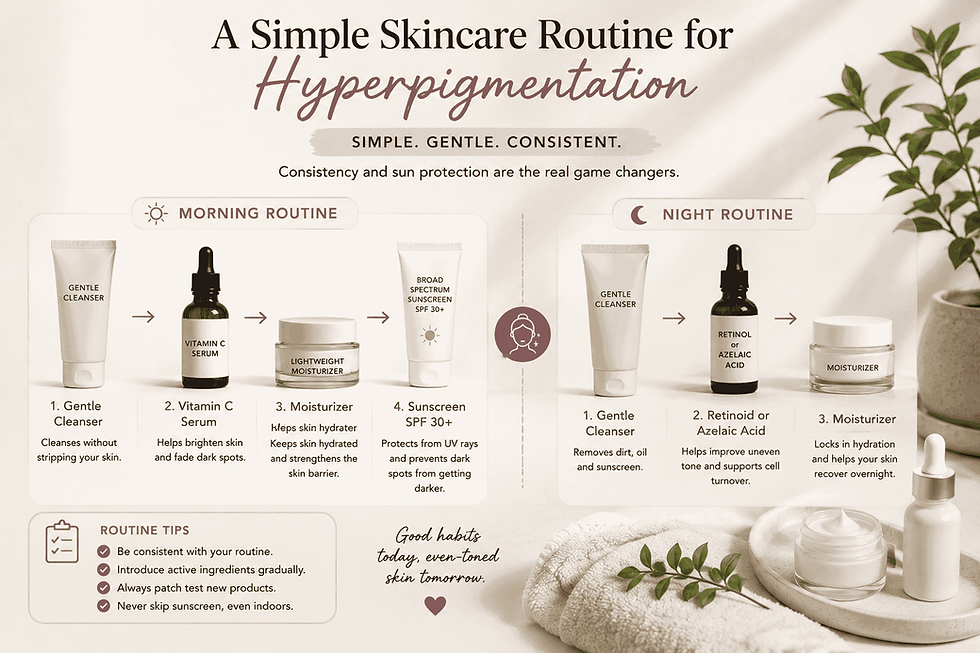
A Simple Hyperpigmentation Routine
If you're overwhelmed by product choices, start with the basics.
Morning
Gentle cleanser
Vitamin C serum
Lightweight moisturizer
Broad-spectrum sunscreen SPF 30+
Evening
Gentle cleanser
Retinoid or azelaic acid
Moisturizer
You don't need a ten-step skincare routine to improve uneven skin tone.
Simple routines are often easier to maintain, making them more effective in the long run.
When it comes to fading hyperpigmentation, choosing the right active ingredients matters. Ingredients such as niacinamide, vitamin C, azelaic acid, alpha arbutin, and tranexamic acid can target uneven pigmentation in different ways. [Explore the best ingredients for hyperpigmentation and learn what each one does.]
Frequently Asked Questions
Why are my dark spots getting darker?
Dark spots may become darker because of continued sun exposure, picking at acne, over-exfoliating, or skin irritation. These factors increase melanin production and slow the fading process.
Can over-exfoliating make hyperpigmentation worse?
Yes. Excessive exfoliation weakens the skin barrier, leading to irritation and inflammation that can worsen post-inflammatory hyperpigmentation.
How long does hyperpigmentation take to fade?
Mild hyperpigmentation may improve within 6 to 12 weeks, while deeper pigmentation or melasma can take several months. Consistent sun protection and a gentle skincare routine are essential.
Does sunscreen really help fade dark spots?
Yes. Sunscreen prevents UV exposure from triggering more melanin production, allowing existing dark spots to fade more effectively over time.
Final Thoughts
Hyperpigmentation isn't always difficult to treat because of ineffective products. In many cases, everyday habits are quietly slowing your progress.
Skipping sunscreen, picking at blemishes, over-exfoliating, using too many active ingredients, or expecting instant results can all keep dark spots around much longer than necessary.
The good news is that these mistakes are entirely avoidable. By protecting your skin barrier, using proven ingredients consistently, and giving your skin time to heal, you can support a more even complexion and gradually reduce the appearance of dark spots.
Remember, healthy skin is built through consistent care—not quick fixes. Every small step you take today brings you closer to clearer, more even-toned skin.


Comments