How to Fade Acne Marks and Dark Spots: A Complete Guide (Naturally and Medically)

Updated: Aug 13
Introduction
The pimple is gone, but the mark it left behind isn't.
If you've ever looked in the mirror weeks after a breakout and wondered why your skin still isn't clear, you're not alone.
For many people, the aftermath of acne can be even more frustrating than the breakout itself. Those lingering brown, red, or purple spots can make it feel like your acne never truly healed.
The good news is that these marks are often not permanent scars. In most cases, they're a temporary result of your skin's natural healing process and can fade over time with the right care.
Whether your goal is to even out your skin tone or speed up the fading process, understanding what causes acne marks is the first step.
In this guide, you'll learn:
What hyperpigmentation is
The different types of acne marks
Why they develop after acne
What influences how quickly they fade
The best treatments, skincare ingredients, and prevention tips
Let's begin by understanding what's actually happening beneath your skin.

What Is Hyperpigmentation?
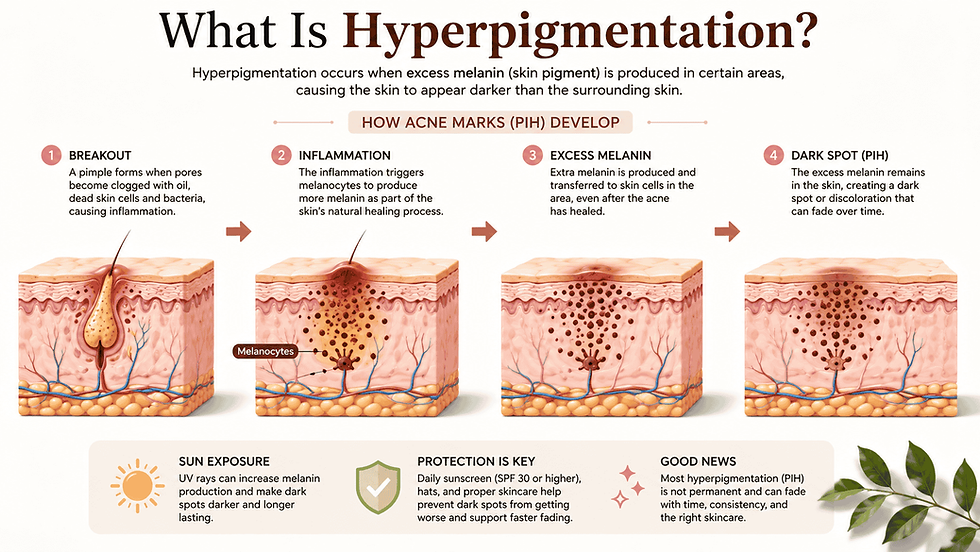
Hyperpigmentation is a common skin condition where patches of skin become darker than the surrounding area due to an increase in melanin, the natural pigment responsible for your skin, hair, and eye color.
When your skin experiences inflammation—whether from acne, eczema, a cut, or another injury—it immediately starts repairing itself. As part of this healing process, the skin may produce more melanin than necessary.
Once the inflammation settles, some of that extra pigment can remain behind, creating a flat dark spot.
These dark spots are commonly known as post-acne marks or acne pigmentation.
Although they can take time to fade, hyperpigmentation is generally harmless and doesn't mean your acne is still active.
Common Causes of Hyperpigmentation
While acne is one of the leading causes, hyperpigmentation can also develop from:
Acne breakouts
Picking or popping pimples
Cuts, burns, or skin injuries
Eczema and other inflammatory skin conditions
Hormonal changes, such as melasma
Excessive sun exposure
No matter the cause, the underlying process is similar: inflammation triggers your skin to produce excess pigment during healing.
Who Is More Likely to Develop Hyperpigmentation?
Anyone can develop acne marks, but certain factors increase your risk.
You may be more prone to post-inflammatory hyperpigmentation if you:
Have medium to deep skin tones
Experience frequent or severe acne
Pick or squeeze your pimples
Spend time in the sun without sunscreen
Delay treating active breakouts
Understanding the Two Types of Acne Marks
One of the biggest misconceptions about acne marks is that they're all the same. In reality, the discoloration left behind after a breakout usually falls into one of two categories.
Understanding which type you have is important because the most effective treatment depends on what's causing the mark.
1. Post-Inflammatory Hyperpigmentation (PIH)
If your acne leaves behind brown, tan, gray, or nearly black spots, you're most likely dealing with Post-Inflammatory Hyperpigmentation (PIH).
PIH develops when inflammation stimulates pigment-producing cells, called melanocytes, to produce excess melanin. Even after the pimple heals, the extra pigment remains in the skin, leaving behind a dark mark.
These spots are completely flat and are especially common in people with olive, tan, brown, and deeper skin tones.
Sun exposure can make PIH appear darker and prolong the healing process, which is why daily sunscreen is essential when treating hyperpigmentation.
The encouraging news is that PIH is temporary. With consistent skincare and sun protection, most dark spots gradually become lighter over time.
2. Post-Inflammatory Erythema (PIE)
Not every acne mark is caused by excess pigment.
If the marks left behind are pink, red, or purple instead of brown, they're more likely to be Post-Inflammatory Erythema (PIE).
Unlike PIH, PIE develops because tiny blood vessels beneath the skin remain enlarged or damaged after inflammation. Instead of excess melanin, it's these blood vessels that give the skin its reddish appearance.
PIE is more common in lighter skin tones, although it can occur in anyone.
Because PIE isn't a pigmentation issue, products designed only to lighten dark spots may not be enough. Ingredients that calm inflammation and support the skin barrier often produce better results.
What's the Difference Between PIH and PIE?
Although both appear after acne has healed, they're caused by different processes.
PIH is related to excess melanin, so the marks appear brown, gray, or dark brown. These spots often become more noticeable with sun exposure and usually respond well to brightening ingredients that target pigmentation.
PIE, on the other hand, is related to damaged blood vessels rather than pigment. The marks appear pink or red and are better treated with ingredients that reduce inflammation and strengthen the skin barrier.
It's also possible to have both PIH and PIE at the same time, especially if you've experienced moderate to severe acne. Knowing which type you're dealing with can help you choose products that actually target the underlying cause instead of relying on trial and error.

Why Do Acne Marks Form?
Every pimple triggers an inflammatory response.
When acne develops, your immune system sends specialized cells to fight bacteria, remove damaged tissue, and begin repairing the skin.
During this process, the skin may either produce extra melanin or leave behind enlarged blood vessels as it heals.
This is why discoloration can remain long after the pimple itself has disappeared.
The more severe the inflammation, the greater the chance that a noticeable mark will develop.
Several factors can make acne marks more likely:
Picking or Popping Pimples: Squeezing pimples may seem tempting, but it significantly increases inflammation and damages healthy skin around the blemish. This not only delays healing but also raises the risk of developing stubborn dark spots and permanent acne scars.
Severe or Cystic Acne: Deep, painful breakouts affect the skin more intensely than small whiteheads or blackheads. Because the inflammation extends deeper into the skin, there's a higher chance of long-lasting discoloration after the acne heals.
Sun Exposure: Ultraviolet (UV) rays stimulate melanin production, making existing dark spots darker and slowing their natural fading process. Even the most effective brightening ingredients won't work as well if your skin isn't protected from daily sun exposure.
Delaying Acne Treatment: The longer acne remains inflamed, the more damage it can cause. Treating breakouts early doesn't just help clear acne—it also reduces the likelihood of developing post-inflammatory marks.
Your Skin Tone: People with medium to deep skin tones naturally produce more melanin, making them more susceptible to developing post-inflammatory hyperpigmentation after acne. This doesn't mean lighter skin tones are immune—they're simply more likely to develop red marks (PIE) instead of brown ones.

Acne Marks vs. Acne Scars
Many people use the terms acne marks and acne scars interchangeably, but they're not the same.
Acne marks are changes in skin color. The skin remains smooth and flat, and the discoloration gradually fades with time and proper skincare.
Acne scars, however, are changes in the skin's texture caused by damage to collagen during the healing process.
They may appear as depressions, pits, or raised areas and usually require professional treatments such as microneedling, chemical peels, or laser therapy.
If your skin feels smooth but looks discolored, you're most likely dealing with acne marks—not scars—which means they're much more likely to improve with consistent skincare.
How Long Do Acne Marks Take to Fade?
One of the most common questions people ask is, "How long will these dark spots take to disappear?"
Unfortunately, there's no one-size-fits-all answer. The time it takes for acne marks to fade depends on several factors, including the type of mark, your skin tone, the severity of the inflammation, sun exposure, and how consistent you are with your skincare routine.
The good news is that most acne marks do fade over time—they just require patience.
Mild Acne Marks
If the inflammation was minimal and the mark is relatively light, you may notice improvement within 4 to 8 weeks. With proper skincare and daily sunscreen, these marks often continue fading over the following months.
Moderate Hyperpigmentation
Darker or more widespread marks usually take longer. Most people begin seeing noticeable improvement within 3 to 6 months, especially when using proven brightening ingredients consistently.
Stubborn or Deep Hyperpigmentation
Marks left behind by severe or cystic acne can persist for 6 to 12 months, and in some cases even longer. This is particularly common in people with medium to deep skin tones, where the skin naturally produces more melanin.
The important thing to remember is that slow fading doesn't mean your skincare isn't working. Skin renewal is a gradual process, and improvements often happen little by little.
What Affects How Quickly Acne Marks Fade?
Several factors influence the healing process:
1. Your Skin Tone
People with deeper skin tones tend to develop darker post-inflammatory hyperpigmentation because their skin naturally produces more melanin. As a result, these marks often take longer to fade.
2. Sun Exposure
One of the biggest reasons acne marks linger is unprotected sun exposure. UV rays stimulate melanin production, making existing dark spots darker and slowing the fading process.
Even a few minutes of daily sun exposure can undo weeks of progress. That's why sunscreen isn't optional—it's one of the most important steps in treating hyperpigmentation.
If you are unsure of which sunscreen to choose for hyperpigmentation then checkout our recent post Best Sunscreen for Hyperpigmentation.
3. Active Acne
If you're constantly getting new breakouts, your skin is always trying to heal fresh inflammation while old marks are still fading. Treating active acne and preventing new pimples is just as important as treating existing pigmentation.
4. Picking at Pimples
Picking delays healing, increases inflammation, and often leaves behind darker, more stubborn marks. Avoiding this habit can make a significant difference in how your skin heals.
The Best Ingredients for Fading Acne Marks
While no ingredient can erase hyperpigmentation overnight, several have been well studied for their ability to reduce discoloration and even out skin tone.
Niacinamide
Niacinamide is one of the most beginner-friendly ingredients for treating acne marks. It helps reduce the transfer of melanin within the skin, improves the skin barrier, calms inflammation, and regulates oil production.
Because it's gentle, it works well for most skin types, including sensitive and acne-prone skin.
Best for: Post-inflammatory hyperpigmentation, mild redness, oily and acne-prone skin.
Vitamin C
Vitamin C is a powerful antioxidant that brightens the skin while protecting it from environmental damage.
It helps reduce excess melanin production, improves overall skin radiance, and works particularly well when paired with daily sunscreen.
Best for: Uneven skin tone, dull skin, mild to moderate dark spots.
Azelaic Acid
Azelaic acid is one of the few ingredients that can help improve both acne and the marks it leaves behind.
It reduces inflammation, fights acne-causing bacteria, and helps fade post-inflammatory hyperpigmentation. It's also considered suitable for sensitive skin and is often recommended by dermatologists.
Best for: Acne with pigmentation, redness, sensitive skin.
Alpha Arbutin
Alpha arbutin works by slowing down the enzyme responsible for producing excess melanin. It's gentle, effective, and often combined with ingredients like niacinamide or vitamin C for enhanced results.
Best for: Persistent dark spots, uneven pigmentation, daily use.
Retinoids
Retinoids increase skin cell turnover, allowing pigmented cells to shed more quickly while stimulating healthier skin underneath.
They're among the most effective ingredients for improving acne, hyperpigmentation, and early signs of aging, but they should be introduced gradually to minimize irritation.
Best for: Stubborn pigmentation, acne-prone skin, long-term skin renewal.
Tranexamic Acid
Tranexamic acid has gained popularity for treating stubborn hyperpigmentation, including post-acne marks. It works by interrupting pathways involved in excess pigment production and is often used alongside other brightening ingredients.
Best for: Resistant pigmentation, uneven skin tone.
Kojic Acid
Kojic acid helps reduce melanin production and is commonly found in brightening serums and creams. Because it can sometimes irritate sensitive skin, it's best introduced slowly.
Best for: Dark spots, hyperpigmentation.

Infographic showing the best skincare ingredients for fading acne marks and dark spots, including niacinamide, vitamin C, azelaic acid, alpha arbutin, retinoids, and sunscreen.
Natural Remedies: Do They Really Work?
Many DIY remedies claim to remove dark spots naturally, but not all are supported by scientific evidence.
Here's what the research suggests:
Aloe Vera: Contains compounds such as aloin, which may help reduce pigmentation while soothing irritated skin. Although the effects are generally mild, aloe vera can be a good supportive ingredient for calming inflamed skin. (Evidence: Limited but promising)
Green Tea: Rich in antioxidants that help reduce inflammation and protect the skin from oxidative stress. While it isn't a replacement for targeted skincare ingredients, it may support overall skin healing. (Evidence: Moderate for reducing inflammation)
Turmeric: Curcumin, the active compound in turmeric, has anti-inflammatory and antioxidant properties. Some small studies suggest it may improve hyperpigmentation, but more high-quality research is needed. (Evidence: Promising but limited)
Licorice Root Extract: Contains glabridin, a compound known to help reduce excess melanin production. Unlike many DIY remedies, licorice extract is commonly included in professionally formulated skincare products. (Evidence: Good)
Natural Remedies to Avoid
Just because something is natural doesn't mean it's safe for your skin.
A void applying the following directly to your face:
Lemon juice
Toothpaste
Baking soda
Undiluted apple cider vinegar
Warning: These remedies can irritate the skin, damage the skin barrier, and actually make hyperpigmentation worse.
Can You Combine These Ingredients?
Yes—but introducing too many active ingredients at once can overwhelm your skin. A simple routine is often the most effective.
Morning Routine
Gentle cleanser
Vitamin C or niacinamide serum
Moisturizer
Broad-spectrum sunscreen (SPF 30 or higher)
Night Routine
Gentle cleanser
Retinoid or azelaic acid
Moisturizer
Consistency matters far more than using a dozen different products.
Professional Treatments for Acne Marks and Dark Spots
While most acne marks gradually fade with consistent skincare, some can persist for months or even years.
If over-the-counter products haven't given you the results you're looking for, professional treatments performed by a dermatologist may help speed up the process.
The best treatment depends on whether you're dealing with post-inflammatory hyperpigmentation (PIH), post-inflammatory erythema (PIE), or acne scars.
Chemical Peels
Chemical peels use acids such as glycolic acid, salicylic acid, or lactic acid to exfoliate the outer layers of the skin. As new skin cells replace the old ones, dark spots gradually become less noticeable.
Chemical peels are commonly recommended for mild to moderate hyperpigmentation and can also improve skin texture and acne.
Most people need multiple sessions for the best results.
Best for:
Post-inflammatory hyperpigmentation (PIH)
Uneven skin tone
Mild acne
Laser Treatments
Laser treatments target specific skin concerns using concentrated light energy.
Some lasers focus on excess pigment to fade dark spots, while others target blood vessels to reduce the redness associated with post-inflammatory erythema (PIE).
Because different lasers treat different concerns, it's important to have your skin assessed by a dermatologist before choosing a treatment.
Best for:
Stubborn PIH
Persistent PIE
Long-lasting discoloration
Microneedling
Microneedling involves creating tiny, controlled injuries in the skin using fine needles. This stimulates collagen production and encourages healthy skin renewal.
Although it's best known for treating acne scars, microneedling can also improve stubborn pigmentation over time, especially when combined with topical treatments recommended by a dermatologist.
Best for:
Acne scars
Stubborn pigmentation
Uneven skin texture
Prescription Medications
If your hyperpigmentation is severe or doesn't improve with over-the-counter skincare, your dermatologist may prescribe stronger treatments.
These may include prescription-strength retinoids, azelaic acid, hydroquinone (for short-term use under medical supervision), or combination creams designed specifically for hyperpigmentation.
Always use prescription treatments exactly as directed, as overuse can lead to irritation or worsen pigmentation.
How to Prevent Acne Marks from Coming Back
The easiest acne mark to treat is the one that never forms.
While you can't always prevent hyperpigmentation, adopting healthy skincare habits can significantly reduce your risk.
Treat Acne Early
The longer a pimple remains inflamed, the greater the chance it will leave behind a mark. Using effective acne treatments early can help reduce inflammation and minimize the risk of post-inflammatory pigmentation.
Don't Pick or Pop Pimples
Picking at your skin damages healthy tissue, increases inflammation, and allows bacteria to spread. It also greatly increases the risk of dark spots and permanent acne scars.
As tempting as it may be, allowing pimples to heal naturally gives your skin the best chance to recover without lasting marks.
Wear Sunscreen Every Day
If there's one skincare product that makes the biggest difference when treating dark spots, it's sunscreen.
Daily use of a broad-spectrum sunscreen with at least SPF 30 helps prevent existing marks from becoming darker while protecting your skin from UV damage.
Apply sunscreen every morning—even on cloudy days—and reapply if you're spending extended time outdoors.
Keep Your Skin Barrier Healthy
Over-exfoliating or using too many active ingredients at once can weaken your skin barrier, causing irritation that may lead to even more pigmentation.
Stick to a simple routine and introduce new products gradually. Healthy skin heals more efficiently.
Be Consistent
Hyperpigmentation fades slowly. Using your skincare products consistently for several months is far more effective than constantly switching between trending products. Patience is one of the most important parts of treating acne marks.
Recommended Skincare Routine for Acne Marks
A complicated routine isn't necessary. In fact, keeping your skincare simple often leads to better results.
Morning Routine
Gentle cleanser
Vitamin C or niacinamide serum
Lightweight moisturizer
Broad-spectrum sunscreen (SPF 30 or higher)
This routine helps brighten existing pigmentation while protecting your skin from further UV damage.
Evening Routine
Gentle cleanser
Retinoid, azelaic acid, or alpha arbutin (choose based on your skin's needs)
Moisturizer
If you're new to active ingredients, start by using them two or three nights a week and gradually increase the frequency as your skin adjusts.
Common Mistakes That Slow Down Fading
Even with the best skincare products, certain habits can make acne marks last longer.
Avoid these common mistakes:
Skipping sunscreen
Picking or squeezing pimples
Using harsh scrubs
Over-exfoliating
Layering too many active ingredients
Expecting results within a few weeks
Stopping treatment too early
Remember, consistency almost always beats intensity.
Frequently Asked Questions
Can acne marks disappear completely?
Yes. Most acne marks caused by hyperpigmentation or redness gradually fade over time. However, acne scars caused by damage to the skin's structure usually require professional treatment.
What's the fastest way to fade acne marks?
The fastest approach combines:
Treating active acne
Daily sunscreen
Proven brightening ingredients such as niacinamide, vitamin C, azelaic acid, retinoids, or alpha arbutin
Professional treatments for stubborn cases
There isn't a single product that works overnight.
Can I use vitamin C and niacinamide together?
Yes. These ingredients work well together and are suitable for most skin types. They can help brighten the skin, reduce hyperpigmentation, and support a healthy skin barrier.
Do dark spots always become permanent?
No. Most post-inflammatory hyperpigmentation is temporary. However, without proper sun protection or if new acne continues to develop, the marks may persist much longer.
Are natural remedies enough to remove acne marks?
Natural remedies such as aloe vera or licorice root extract may provide mild benefits, but they generally work much more slowly than evidence-based skincare ingredients.
For moderate or stubborn pigmentation, ingredients like retinoids, azelaic acid, vitamin C, and niacinamide usually produce better results.
Final Thoughts
Acne marks can test your patience, but they're a normal part of the skin's healing process—and in most cases, they aren't permanent.
The key to fading dark spots is consistency.
Protect your skin with sunscreen every day, treat active acne early, avoid picking at pimples, and use ingredients backed by scientific evidence. While results won't appear overnight, small improvements add up over time.
If your acne marks don't improve after several months of consistent skincare, or if you're unsure whether you're dealing with hyperpigmentation or true acne scars, consult a dermatologist. They can recommend professional treatments tailored to your skin type and concerns.
With the right approach and realistic expectations, clearer, more even-toned skin is an achievable goal.
Related Posts
If you're building a skincare routine for clearer, healthier skin, these guides may help:
How to Build a Skincare Routine for Acne-Prone Skin
https://www.thequietalchemy.com/post/how-to-build-a-skincare-routine-for-acne-prone-skin
Best Skincare Ingredients for Hyperpigmentation
Niacinamide vs. Vitamin C: Which Is Better for Dark Spots?
https://www.thequietalchemy.com/post/niacinamide-vs-vitamin-c-for-dark-spots
How Long Do Acne Marks Take to Fade?
https://www.thequietalchemy.com/post/why-acne-marks-take-so-long-to-fade
Common Mistakes That Make Hyperpigmentation Worse
How to Prevent Dark Spots After Acne
Best Sunscreens for Acne-Prone Skin
https://www.thequietalchemy.com/post/best-sunscreen-under-500-india


Comments