Natural Skincare Routine for Different Seasons: A Simple Guide to Healthy, Glowing Skin

Your skin does not need the exact same routine throughout the year. Changes in temperature, humidity, sunlight, pollution, and daily habits can affect how your skin looks and feels.
A lightweight routine that works beautifully during summer may leave your skin feeling dry during winter, while a rich winter moisturizer can feel heavy and uncomfortable during humid weather.
The good news is that you do not need a completely different shelf of products for every season.
A natural skincare routine for different seasons is mainly about adjusting hydration, cleansing, moisturizing, sun protection, and a few simple habits according to what your skin needs.
Whether you have oily, dry, combination, acne-prone, or sensitive skin, seasonal skincare can help you maintain a healthy skin barrier while keeping your routine simple.
If you are just building your routine, start with the basics instead of buying multiple seasonal products. This [simple natural skincare routine for beginners] can help you establish a consistent foundation before making seasonal adjustments.

Why Should Your Skincare Routine Change With the Seasons?
Your skin constantly responds to its environment.
Hot and humid weather can increase sweating and oil production, while cold and dry air can increase moisture loss. Seasonal changes can also influence breakouts, irritation, dullness, rough texture, and sensitivity.
This is why a seasonal skincare routine can be more useful than following exactly the same routine blindly throughout the year.
However, seasonal skincare does not mean changing everything whenever the weather changes.
Your basic routine can remain consistent:
Gentle cleansing
Hydration
Moisturizing
Daily sunscreen
Occasional exfoliation
Healthy lifestyle habits
The products and textures can simply become lighter or richer depending on the season.
Natural Skincare Routine for Spring
Spring often brings moderate temperatures, increasing humidity, pollen, and more time outdoors. Your skin may start producing slightly more oil after the dryness of winter.
This is a good time to gradually transition from heavy winter skincare to a lighter routine.
Morning Spring Skincare Routine
Start your morning with a gentle cleanser for your skin type. If your skin is dry or sensitive, avoid harsh foaming cleansers that leave your face feeling tight.
Follow with a lightweight hydrating product. Ingredients such as aloe vera, glycerin, hyaluronic acid, or green tea can provide hydration without making the skin feel greasy.
Apply a lightweight moisturizer and finish with broad-spectrum sunscreen.
Sunscreen remains important even when the weather is pleasant. UV exposure does not disappear simply because temperatures are comfortable.

Evening Spring Skincare Routine
Cleanse your face to remove sunscreen, sweat, pollution, and makeup.
Follow with a simple hydrating step and moisturizer.
If your skin tolerates exfoliation, you can exfoliate occasionally rather than scrubbing your skin every day. Over-exfoliation can weaken the skin barrier and make irritation and breakouts worse.
Spring Skincare Tip
Spring is a good season to observe your skin instead of immediately adding new products.
If your skin is becoming oilier, switch to lighter textures. If it remains dry, continue using a richer moisturizer at night.
Natural Skincare Routine for Summer
Summer can be challenging for people with oily, acne-prone, or combination skin.
Heat and humidity can increase sweating and oil production.
Sunscreen, makeup, pollution, and sweat can also contribute to clogged pores when they are not properly removed.
But the solution is not aggressive cleansing.
A common summer skincare mistake is trying to remove every trace of oil from the skin. This can leave the skin barrier irritated and uncomfortable.
Morning Summer Skincare Routine
Begin with a gentle cleanser.
If your skin is very oily, you may prefer a lightweight gel cleanser. If your skin is dry or sensitive, a gentle cream or low-foaming cleanser may be more comfortable.
Next, use a lightweight hydrating product.
You do not need to avoid hydration because you have oily skin. Oily skin still needs hydration. Dehydrated skin can feel tight while continuing to produce oil.
Choose a lightweight, non-comedogenic moisturizer and apply broad-spectrum SPF 30 or higher.
If you spend considerable time outdoors, sunscreen should be reapplied according to your exposure and the sunscreen's instructions.

Evening Summer Skincare Routine
Cleanse your face thoroughly but gently.
If you wore water-resistant sunscreen or makeup, make sure it is properly removed before going to bed.
Follow with a lightweight moisturizer.
For acne-prone skin, avoid piling on multiple harsh acne treatments at once. A simple routine is often easier for your skin to tolerate.
Natural Summer Skincare Tips
You can also make small lifestyle adjustments:
Wash your face after heavy sweating when practical.
Avoid repeatedly touching your face.
Keep pillowcases clean.
Avoid extremely hot water.
Choose lightweight skincare textures.
Stay hydrated.
Protect your skin from direct sunlight with clothing, shade, and sunscreen.
Natural skincare does not mean putting every kitchen ingredient on your face. Lemon juice, baking soda, toothpaste, and undiluted essential oils can irritate the skin and are not necessary for a healthy skincare routine.
Natural Skincare Routine for Monsoon
Monsoon weather brings its own skincare problems.
High humidity, sweat, pollution, and fluctuating temperatures can make skin feel oily and sticky. At the same time, excessive cleansing can damage the skin barrier.
The goal of monsoon skincare is to keep the skin clean without stripping it.
Morning Routine
Use a gentle cleanser followed by lightweight hydration.
A gel-based or water-based moisturizer may feel more comfortable in humid weather.
Finish with sunscreen even on cloudy days. Clouds do not completely block UV radiation.
Evening Routine
Cleanse your skin after coming home, especially if you have spent time outside.
Remove sunscreen and makeup properly before sleeping.
Follow with a lightweight moisturizer.
If you experience frequent clogged pores, avoid heavy layers of oils and thick creams unless your skin genuinely needs them.
Monsoon Skincare Tip
Do not assume that oily skin needs no moisturizer.
A healthy skin barrier requires water and lipids. The goal is to find a moisturizer that provides enough hydration without feeling excessively heavy.
Natural Skincare Routine for Autumn
Autumn is often a transition period.
Humidity may decrease, temperatures may become cooler, and skin can gradually start feeling drier.
This is the perfect time to reassess your routine before winter arrives.
If you used a very lightweight moisturizer during summer, you may gradually move toward a slightly richer formulation.
Morning Autumn Routine
Cleanse gently.
Apply a hydrating serum or moisturizer depending on your skin's needs.
Use sunscreen every morning.
If your skin feels tight after cleansing, consider switching to a gentler cleanser rather than simply adding more products.
Evening Autumn Routine
Cleanse your skin and apply a hydrating moisturizer.
If your skin becomes dry around the cheeks but oily around the forehead and nose, you may have combination skin.
You can adjust the amount of moisturizer instead of using completely different products for every area.
This is also a good time to focus on repairing your skin barrier if summer left your skin irritated or dehydrated.

Natural Skincare Routine for Winter
Winter usually requires the biggest skincare adjustment.
Cold air, low humidity, indoor heating, and hot showers can increase moisture loss from the skin.
This can lead to:
Dry patches
Flaking
Tightness
Rough texture
Itching
Increased sensitivity
Chapped lips
A good winter skincare routine for dry skin should focus on protecting and moisturizing the skin barrier.
Morning Winter Skincare Routine
You may not need an aggressive morning cleanse if your skin is very dry.
Use a gentle cleanser or simply rinse with lukewarm water if that works for your skin.
Apply a hydrating moisturizer while the skin is slightly damp.
Look for barrier-supportive ingredients such as ceramides, glycerin, squalane, shea butter, and hyaluronic acid.
Finish with sunscreen.
Yes, sunscreen is still necessary during winter. UV exposure continues throughout the year.
Evening Winter Skincare Routine
Cleanse with a gentle, non-stripping cleanser.
Apply a hydrating layer followed by a richer moisturizer.
If certain areas are extremely dry, you can use a small amount of an occlusive product over your moisturizer to reduce moisture loss.
Avoid very hot showers and excessive facial scrubbing.
Winter Skincare Tip
One of the simplest natural skincare habits for winter is reducing unnecessary irritation.
You do not need to exfoliate frequently to remove every dry-looking patch. Often, the dryness is a sign that your skin needs moisture and barrier support rather than more exfoliation.
How to Adjust Your Skincare Routine for Your Skin Type
Seasonal changes affect everyone differently.
A person with oily skin may still experience dehydration during winter, while someone with dry skin may experience increased oiliness during summer.
Oily Skin
During hot weather, choose lightweight, non-comedogenic products.
Do not repeatedly wash your face to control oil.
During winter, continue using lightweight hydration but increase the richness if your skin becomes dry.
Dry Skin
Use gentle cleansers and richer moisturizers, particularly during colder months.
Avoid harsh scrubs and very hot water.
Apply moisturizer soon after cleansing to help retain hydration.
Combination Skin
Use lightweight products overall and adjust the amount according to different areas of your face.
For example, you may need more moisturizer on dry cheeks and less around an oily T-zone.
Acne-Prone Skin
Keep your routine simple.
Use gentle cleansing, appropriate acne treatments if needed, moisturizer, and sunscreen.
Avoid constantly changing products or using multiple harsh ingredients because you want faster results.
Sensitive Skin
Seasonal skincare should be especially gentle.
Introduce one new product at a time and patch-test when appropriate.
Avoid heavily fragranced products and aggressive physical scrubs if they consistently trigger irritation.
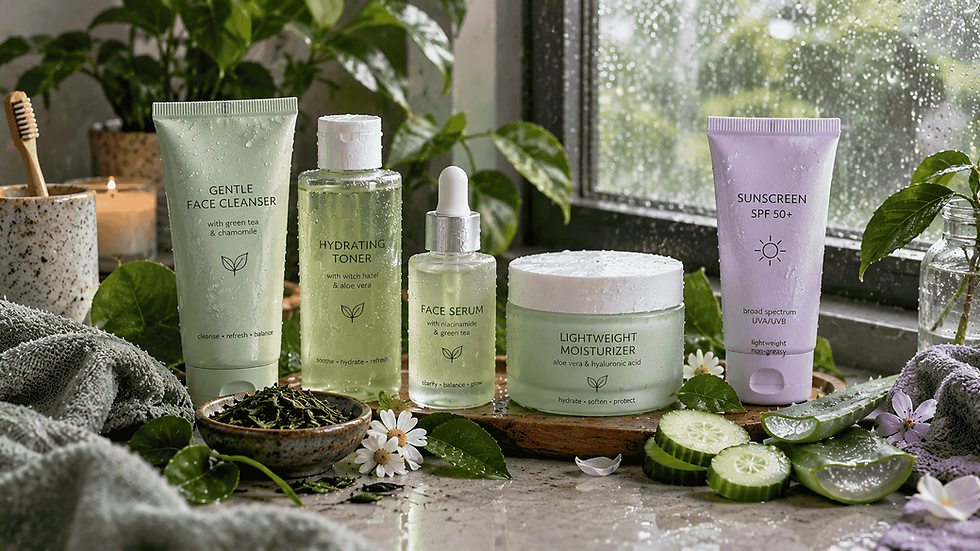
Natural Ingredients That Can Support Healthy Skin
Natural skincare does not have to mean using homemade masks every day.
Many naturally derived ingredients can be incorporated into a simple skincare routine.
Aloe vera can provide a soothing, lightweight
feel.
Green tea contains antioxidant compounds and is commonly used in skincare formulations.
Oatmeal can be useful in soothing skincare products, particularly for dry or sensitive skin.
Squalane is a lightweight moisturizing ingredient that helps reduce moisture loss.
Shea butter can be useful when skin needs richer moisturization.
However, "natural" does not automatically mean safe for everyone. The important question is whether an ingredient is suitable for your skin and properly formulated.
Simple Seasonal Skincare Routine You Can Follow All Year
You do not need a complicated 10-step routine.
A simple natural skincare routine for healthy glowing skin can look like this:
Morning
Cleanse → Hydrate → Moisturize → Sunscreen
Evening
Cleanse → Treatment if needed → Moisturize
Then make seasonal adjustments.
Spring: Lightweight hydration and a gradual transition from winter products.
Summer: Lightweight textures, sweat management, and consistent sunscreen.
Monsoon: Gentle cleansing, lightweight hydration, and proper sunscreen removal.
Autumn: Gradually increase moisturization as the weather becomes drier.
Winter: Richer moisturization and extra attention to the skin barrier.
The foundation stays the same. Only the intensity changes.
Final Thoughts
The best natural skincare routine for different seasons is not about buying a completely new skincare collection every few months.
It is about paying attention to what your skin is telling you.
When the weather becomes hot and humid, you may need lighter textures. When the air becomes cold and dry, your skin may need more moisture and barrier support. During transitional seasons, small adjustments can prevent unnecessary dryness or oiliness.
Most importantly, keep the basics consistent: gentle cleansing, adequate hydration, moisturizer, and daily sun protection.
Healthy skin does not require a complicated routine. It requires consistency, protection, and products that match your skin's actual needs rather than whatever happens to be trending.
A simple routine that you can follow consistently throughout the year will usually be more useful than an elaborate routine that changes every few weeks.



Comments