7 Sunscreen Mistakes That Are Secretly Ruining Your Skin

Many people use sunscreen every single day but still complain that their skin gets darker in summer.
Some notice stubborn tanning on the face, while others struggle with dullness, uneven skin tone, or pigmentation despite applying SPF regularly.
This often leads people to believe that sunscreen does not actually work.
But in most cases, the real problem is not the sunscreen itself — it is the way it is being used.
Small mistakes like applying too little sunscreen, skipping reapplication, or using SPF incorrectly can reduce protection significantly.
As a result, UV rays still reach the skin and trigger tanning.
If you have ever wondered why your face still gets tanned even after using sunscreen, these common mistakes may be the reason.
Why Does Skin Tan Even After Using Sunscreen?
Tanning happens when the skin produces extra melanin to protect itself from UV damage.
Sunscreen helps reduce the amount of UV radiation reaching the skin, but it cannot work properly if it is not applied correctly.
Even expensive sunscreens may fail if basic application mistakes are being made daily.
In hot and humid weather, sunscreen also breaks down faster because of sweat, oil, and sun exposure.
This is why many people experience tanning during summer even after using SPF products.
Understanding the correct way to use sunscreen can make a major difference in preventing tanning and maintaining an even skin tone.
Many people assume sunscreen alone is enough to completely prevent tanning, but factors like incorrect application, low quantity, and missed reapplication can still leave the skin exposed to UV damage. Understanding why this happens can make your skincare routine much more effective.
Why you're tanning despite using sunscreen and How to fix it.
1. Applying Too Little Sunscreen on Your Face
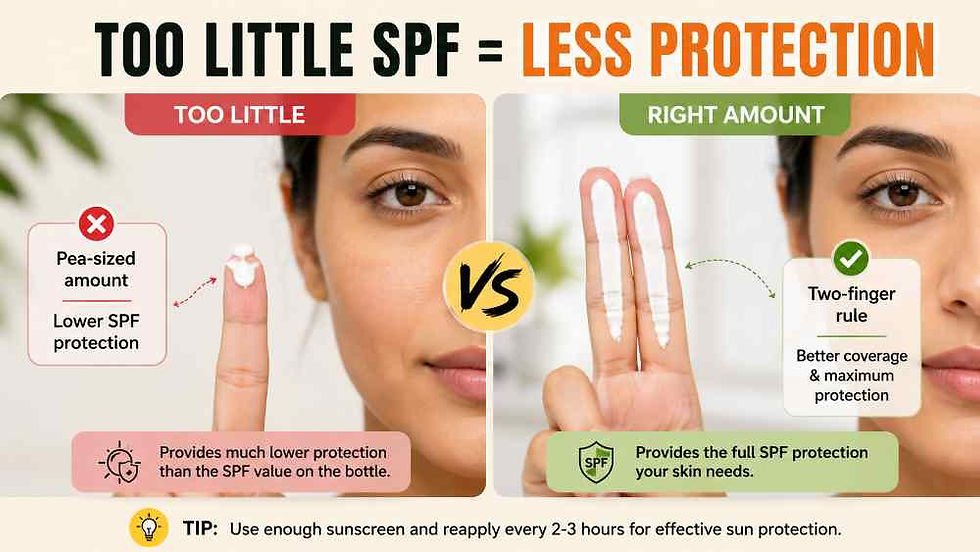
One of the biggest reasons sunscreen fails is because people do not apply enough of it.
Most people use only a tiny drop for the entire face.
Unfortunately, that amount is usually far below what is needed to get the SPF protection mentioned on the label.
For example, if your sunscreen says SPF 50 but you apply too little, the actual protection may become much lower.
This means your skin is still exposed to UV rays that can cause:
Tanning
Sun damage
Pigmentation
Uneven skin tone
Dullness
How Much Sunscreen Should You Apply?
A commonly recommended method is the two-finger rule.
Apply sunscreen along the length of two fingers for the face and neck
combined.
Spread it evenly without missing areas like:
Around the nose
Near the hairline
Ears
Neck
These areas are often forgotten and tend to tan faster.
If your skin still gets darker despite using sunscreen daily, using too little product could be the reason.
2. Not Reapplying Sunscreen During the Day
Many people apply sunscreen once in the morning and assume they are protected for the entire day.
This is one of the most common sunscreen mistakes that causes tanning.
Sunscreen does not stay fully effective for long hours, especially in Indian summers where sweat and humidity are high.
Throughout the day, sunscreen gradually breaks down due to:
Sweat
Oil production
Heat
Touching the face
Outdoor exposure
Once the protective layer weakens, UV rays can affect the skin again.
How Often Should You Reapply Sunscreen?
If you are outdoors, sunscreen should usually be reapplied every 2–3 hours.
Reapplication becomes even more important if you:
Sweat heavily
Travel in sunlight
Attend college or coaching classes
Ride a scooter or bike
Spend time outdoors frequently
People who skip reapplication often wonder why they are tanning even after using sunscreen regularly. In reality, the sunscreen may simply not be lasting long enough.

3. Applying Sunscreen Right Before Going Outside
Another common mistake is applying sunscreen and immediately stepping into direct sunlight.
Sunscreen needs a little time to settle properly on the skin and form an even protective layer.
If you apply it at the last moment, your skin may remain partially exposed during the first few minutes outdoors.
Once the skin has already developed tanning, soothing ingredients and gentle de-tan treatments can help improve dullness and uneven skin tone over time. Natural remedies are especially popular during summer because they are simple and easy to include in a weekly routine.
Top 5 Homemade Facemask for De-tan.
When Should You Apply Sunscreen?
Ideally, sunscreen should be applied around 15–20 minutes before sun exposure.
This gives the product enough time to absorb properly and provide better protection against tanning.
Many people ignore this small detail, but it can make a noticeable difference during peak summer months.

4. Skipping Sunscreen Indoors
A lot of people think sunscreen is only necessary when going outside.
But sunlight can still affect the skin indoors through:
Windows
Balcony light
Car windows
Direct sunlight entering rooms
If you spend long hours near a bright window, your skin may still develop tanning or pigmentation over time.
This is especially important for students and people working on laptops near windows during daytime.
Can Indoor Sunlight Cause Tanning?
Yes, prolonged exposure to sunlight coming through windows can still affect the skin.
People with acne marks, uneven skin tone, or pigmentation may notice worsening discoloration if they skip sunscreen indoors completely.
Using a lightweight sunscreen during the day can help protect the skin even while staying indoors.
Preventing tanning is important, but restoring your skin after prolonged sun exposure also requires consistency. Small daily habits often make a bigger difference than harsh treatments when it comes to reducing tan naturally.
Tan removal tips.

5. Applying Sunscreen Only on the Face
Many people carefully apply sunscreen on the face but completely ignore the rest of the body.
As a result, areas like the neck and hands often become darker than the face. This creates uneven tanning and patchy skin tone.
Body Parts People Commonly Forget
Some of the most ignored areas include:
Neck: The neck gets exposed to sunlight daily and tends to tan very quickly.
Ears: People rarely apply sunscreen properly on the ears, even though they receive direct sun exposure.
Hands: Hands are constantly exposed while driving, walking, or riding two-wheelers.
Feet: Feet can tan easily when wearing sandals or slippers outdoors.
Applying sunscreen only on the face may leave the rest of the skin vulnerable to tanning and sun damage.

6. Depending Only on SPF Makeup Products
Many makeup products today include SPF protection.
This includes:
Foundations
BB creams
Compact powders
Tinted moisturizers
Because of this, some people skip regular sunscreen and rely only on makeup SPF. Unfortunately, this usually does not provide enough protection against tanning.
Is SPF Foundation Enough?
Most people apply only a thin layer of makeup. But to get the full SPF mentioned on the product, a much thicker amount would be needed.
This means makeup alone usually cannot protect the skin properly from UV exposure.
A better option is to use a proper sunscreen underneath makeup and then apply cosmetic products on top.
This helps reduce tanning while still allowing makeup to sit smoothly on the skin.
7. Using the Wrong Sunscreen for Your Skin Type
Not every sunscreen works well for every person.
Using a sunscreen that feels uncomfortable can lead to inconsistent use or poor application.
For example:
Greasy sunscreens may feel heavy on oily skin
Thick formulas may become sticky in humid weather
White cast may make people apply less product
Low SPF products may not provide enough protection during harsh summers
What Type of Sunscreen Helps Prevent Tanning?
Choosing the right sunscreen matters. Look for products with:
SPF 30 or higher
PA+++ or PA++++
Broad-spectrum protection
For oily skin, lightweight gel sunscreens often feel more comfortable during summer.
When sunscreen feels comfortable on the skin, people are more likely to apply enough and reapply consistently.
Sometimes tanning continues simply because the sunscreen formula itself is not suitable for your skin type, weather conditions, or daily routine. Choosing a lightweight broad-spectrum sunscreen that you can comfortably reapply is often more important than using an expensive product occasionally.
8 best broad spectrum sunscreens.
Extra Tips to Prevent Tanning During Summer
Sunscreen works best when combined with good sun protection habits.
Avoid Peak Sun Hours: UV rays are strongest between 10 AM and 4 PM. Limiting unnecessary sun exposure during these hours can help reduce tanning.
Wear Protective Clothing: Using physical protection also helps reduce UV exposure. You can use sunglasses, caps, umbrellas, and full sleeves. This becomes especially useful during intense summer heat.
Stay Consistent With Sunscreen: Some people use sunscreen only occasionally or only on very sunny days. But UV exposure happens daily, even when the weather looks cloudy.
Consistency is one of the biggest factors in preventing tanning and maintaining healthy-looking skin.
Signs Your Sunscreen Routine Is Not Working Properly
Your sunscreen routine may need improvement if you notice:
Skin getting darker quickly
Uneven tanning
Persistent dullness
New pigmentation
Tan lines
Burning sensation outdoors
These signs often indicate insufficient sun protection.
A Simple Daily Sunscreen Routine for Summer
Following a simple routine can help protect the skin better during hot weather.
Morning Routine
Gentle cleanser
Moisturizer if needed
Sunscreen SPF 30 or higher
Makeup if desired
During the Day
Reapply sunscreen every few hours if outdoors.
Night Routine
Cleanse properly to remove sunscreen buildup.
Moisturize the skin before sleeping.
Common Myths About Sunscreen and Tanning
“Dark Skin Does Not Need Sunscreen”
This is false. All skin tones can experience sun damage, tanning, and pigmentation.
“You Don’t Need Sunscreen on Cloudy Days”
UV rays can still penetrate clouds and affect the skin.
“One Application Lasts All Day”
Sweat, oil, and outdoor exposure reduce sunscreen effectiveness over time.
Final Thoughts
If your skin still gets tanned despite using sunscreen, the issue may be related to how the sunscreen is being used rather than the product itself.
Simple mistakes like:
Applying too little sunscreen
Skipping reapplication
Ignoring the neck and hands
Using SPF makeup alone
Choosing the wrong sunscreen
can reduce protection significantly.
Making small improvements in your sunscreen routine can help reduce tanning, dullness, and uneven skin tone over time.
Consistency matters more than expensive products.
Using sunscreen correctly every day is what truly helps protect the skin from tanning and sun damage.


Comments