Dermatologists Are Divided on Vaseline in Winter — Here’s the Side They Don’t Talk About.

Updated: Feb 11
Why people use Vaseline on their face during winter
The real reason skin gets so dry in cold weather.
Winter is brutal on skin.
Cold air outside and dry heat indoors pull moisture straight out of your face.
Many people reach for Vaseline because it feels simple, cheap, and protective.
And honestly, when temperatures drop, even complicated skincare routines don’t always solve the tightness, flakiness, and irritation.
That’s why questions like "Should I put vaseline on my face in winter?" or "Is petroleum jelly safe as a winter moisturiser?" explode every year.
Let’s walk through the dermatologist logic behind it so you can decide if it belongs in your winter routine.

---
What Vaseline Actually Does on the Skin
Hydration vs. Occlusion: Two Very Different Things
Here's the first thing people misunderstand:
Vaseline does not hydrate your skin.
It locks in the hydration you already have.
It’s an occlusive.
That means it forms a protective seal over the surface of your skin.
This reduces moisture loss, especially in harsh winter climates where your skin loses water faster than it can replenish.
Humectants (like hyaluronic acid or glycerin) pull water in.
Vaseline keeps that water from evaporating.
Those two functions are not the same.
And understanding this difference is how you use Vaseline correctly instead of smearing it on dry skin and wondering why nothing improved.

---
Is Vaseline Safe to Use on the Face in Winter?
The Straightforward Dermatology Answer
Yes—Vaseline is generally safe to use on the face in winter.
Dermatologists have recommended petroleum jelly for decades because it’s:
Non-irritating
Hypoallergenic
Extremely effective at preventing moisture loss
Safe for sensitive and eczema-prone skin
Gentle enough for babies and medical wound care
It is basically inert.
Meaning: it won’t react with your skin.
That’s why so many dermatologists keep recommending it even though it feels old-fashioned compared to trendy skincare products.
But being safe doesn’t automatically mean it’s ideal for every single person.
We’ll go into that next.

---
Why Vaseline Works Better in Winter Than Any Other Season
The Barrier Logic You Almost Never Hear Explained
In winter, humidity drops sharply.
Your skin loses water faster.
Your natural oil production slows.
Your barrier becomes weaker.
Wind exposure adds irritation and micro-damage.
All of that together means your skin becomes more vulnerable.
Occlusives like Vaseline shine specifically in low humidity.
Because when the surrounding air is dry, your skin processes any moisture loss more dramatically.
Sealing your face—even lightly—prevents that constant evaporation.
This is why many people suddenly love Vaseline in winter but avoid it in summer.
Season changes matter.

---
Situations Where Vaseline on the Face Makes Perfect Sense
Times When It’s Actually the Best Choice
Here's exactly when using Vaseline on your face in winter is helpful:
1. When your skin is painfully dry or tight
That tight feeling across your cheeks?
That’s moisture loss.
Vaseline slows that process.
2. When your skin barrier is damaged
If you’ve over-exfoliated, overused retinoids, or dealt with windburn, Vaseline helps your skin recover faster.
3. When you’re exposed to extreme winter weather
Outdoor runners, cyclists, skiers, or outdoor workers benefit the most.
4. When dealing with eczema, redness, or irritation
Vaseline is one of the least irritating barrier products on the market.
5. When slugging at night
Applying a thin layer over moisturizers before bed helps the products work better.
In these cases, Vaseline becomes a smart winter tool—not overkill.
---
When Vaseline on the Face Is NOT the Best Idea
Situations Where It Can Cause Breakouts or Congestion
Even though Vaseline is technically non-comedogenic, it can still cause problems.
Here’s when it might not work for you:
1. If your skin is oily
An occlusive on top of natural oil can feel suffocating and heavy.
2. If you don’t cleanse properly
Putting Vaseline over sunscreen, sweat, or leftover makeup traps everything underneath it.
3. If you’re acne-prone
It won’t clog pores, but the sealed environment can trap things that DO clog pores.
4. If you have fungal acne
Warm, sealed environments can worsen those tiny bumps.
5. If you use too much
Some people go overboard and apply way more than they need.
You don’t have to swear off Vaseline entirely—just use it intentionally.
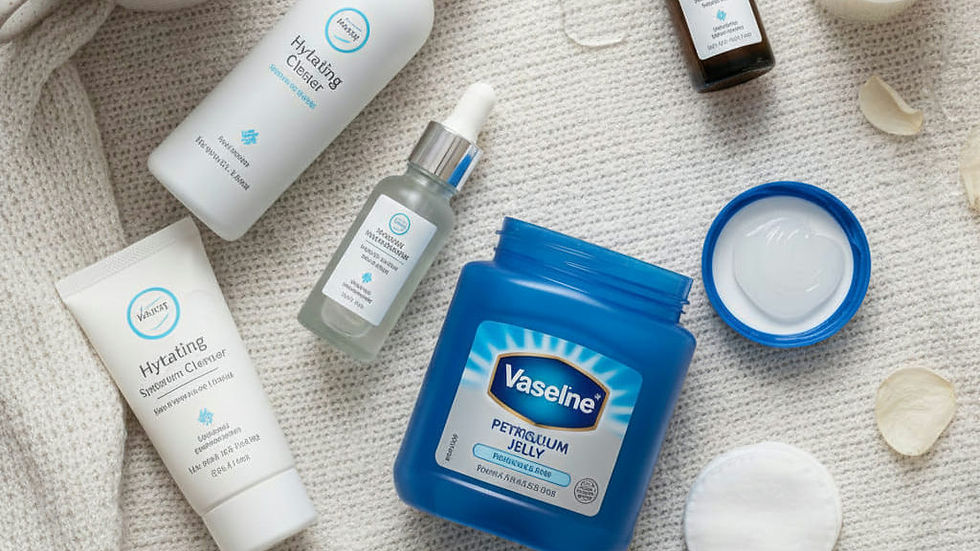
---
How to Use Vaseline on the Face Safely in Winter
The Step-by-Step Method Dermatologists Actually Approve
Here’s the correct winter application routine:
1. Cleanse your face thoroughly
Use a gentle cleanser.
Make sure sunscreen, makeup, and daily grime are washed off.
2. Apply hydration first
Use a humectant or hydrating serum.
Hyaluronic acid or glycerin works perfectly.
3. Seal with your moisturizer
A ceramide moisturizer works best in winter.
4. Apply a thin layer of Vaseline
Think: extremely thin.
A pea-sized amount is enough for your entire face.
5. Use it at night
Daytime application can be too shiny or slippery unless you’re going out into extreme cold.
6. Avoid layering directly over strong actives
Don’t slug right after a high-strength retinoid unless your skin is experienced.
Following these steps keeps your skin moisturized, balanced, and breakout-free.
---
Should You Use Vaseline Every Night in Winter?
Frequency That Works for Each Skin Type
Dry or mature skin:
2–5 nights a week works beautifully.
Combination skin:
Use it only on dry patches.
Oily skin:
Use sparingly, if at all.
Sensitive or eczema-prone skin:
You may benefit from more frequent use.
Acne-prone skin:
Stick to targeted application, not full-face slugging.
Consistency matters, but you don’t need to use Vaseline daily to see results.

---
Vaseline vs Other Occlusives in Winter
What Works Best and Why
Here’s how Vaseline compares to popular winter occlusives:
Petroleum Jelly (Vaseline)
Most occlusive
Pure formula
Best for extremely dry or sensitive skin
CerVe Healing Ointment
Lighter
Contains ceramides and hyaluronic acid
Great option for barrier repair
Aquaphor
Slightly less occlusive
Contains lanolin (can irritate some individuals)
Good for dry patches
Shea Butter
More emollient
Softens skin but not as sealing
Lanolin
Effective but can trigger allergies
If your main winter concern is moisture loss, Vaseline is the strongest protector.
If winter dryness feels slow to heal, non-topical options like red light therapy may help. See our guide to red light therapy devices for home use.
---
Is It a Good Idea to Wear Vaseline Under Makeup in Winter?
The Practical Truth
Usually, no.
Here’s why:
Makeup won’t sit properly
Foundation slides
Your face stays shiny
Products pill or separate
If your concern is winter dryness under makeup, it’s better to use:
A richer moisturizer
A hydrating primer
A facial oil drop mixed with foundation
Save Vaseline for nighttime or for days when you’re outdoors in extreme cold.
---
A Personal Experience: What Happened When I Applied Vaseline All Winter
Last winter, I experimented with full-face slugging for several weeks.
At first, it felt amazing.
My cheeks stopped peeling.
The windburn around my nose healed quickly.
My skin felt protected for the first time all season.
But after about two weeks, I noticed tiny clogged-looking bumps on my forehead.
They weren’t painful, but they were definitely a sign that I was overdoing it.
Once I switched to applying Vaseline only on dry areas and not my entire face, everything balanced out again.
My skin stayed moisturized without the congestion.
That experience is the perfect example of why Vaseline isn’t “good” or “bad”—it just needs to be used correctly.
---
A Simple Winter Skincare Routine That Includes Vaseline
A Practical Template You Can Follow Tonight
Morning Routine:
Gentle cleanser
Hydrating serum
Moisturizer
Sunscreen
Tiny amount of Vaseline on dry patches only (optional)
Night Routine:
Cleanse thoroughly
Hydrating toner or serum
Moisturizer
Thin layer of Vaseline on dry or irritated areas
That’s enough to protect your skin barrier all winter long.
---
Final Verdict: Is Vaseline on the Face in Winter Safe or Too Much?
A Clear, No-Nonsense Conclusion
Vaseline is safe.
Vaseline is effective.
And Vaseline can be a winter skincare essential when used correctly.
It’s not too much.
It’s not dangerous.
It’s not going to damage your skin.
But it can feel heavy, and it can cause congestion if misused.
So the real answer is this:
Use Vaseline strategically.
Use it on dry areas.
Use it to protect your barrier.
Use it when the air is freezing and your skin feels stripped.
And use it with the understanding that hydration goes underneath — not above.


Comments