How to Make Pores Look Smaller (What Actually Works & What Doesn’t)

Updated: Feb 23
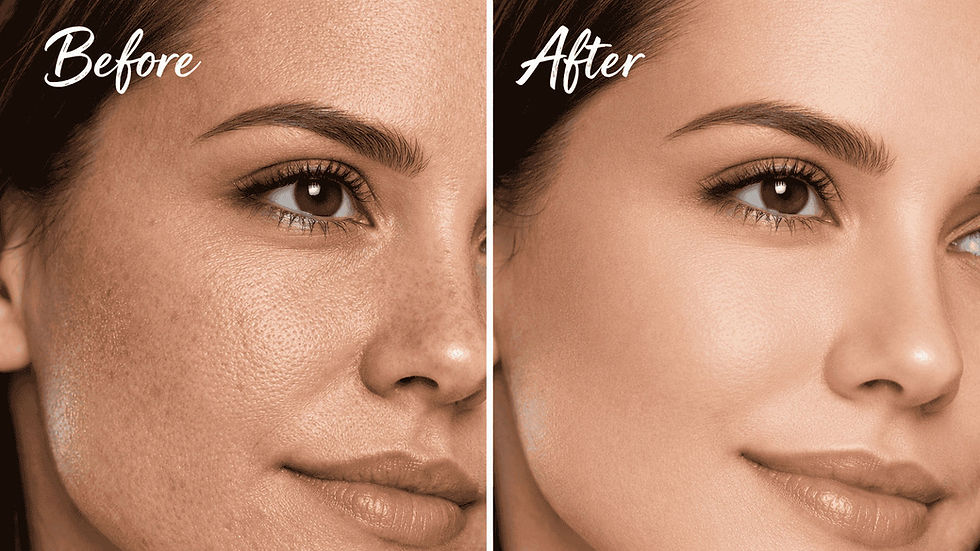
Pores cannot permanently shrink—their size is mostly genetic.
However, the good news is that the right skincare habits can make pores look significantly smaller by improving skin texture, controlling excess oil, and preventing buildup inside pores.
Large-looking pores are usually more visible because of oiliness, clogged pores, dehydration, sun damage, or loss of skin elasticity—not because the pores themselves have “grown.”
In this guide, you’ll learn what actually helps minimize the appearance of pores, which skincare ingredients work best, common mistakes that make pores look worse, and a simple routine you can follow daily for smoother-looking skin.
Why Pores Look Large (Even When They Aren’t)
Pores stretch.
Not permanently, but visibly.
When oil, dead skin cells, sunscreen residue, pollution, and makeup settle into a pore, it expands to accommodate that load.
Add dehydration or a weakened skin barrier, and the pore walls lose firmness, making them appear even larger.
The biggest myth in skincare is that scrubs shrink pores. In reality, harsh scrubs often inflame the pore lining, causing rebound oil production — which makes pores look worse over time.
The only proven ways to reduce the appearance of large pores are:
Controlling excess oil
Keeping pores clear without stripping
Supporting collagen and skin elasticity
Maintaining hydration and barrier health
Everything else is noise.

If you feel like your skincare products used to work but suddenly don’t anymore, visible pores are often one of the first signs.
This usually happens when the skin barrier is compromised, the routine no longer matches your skin’s needs, or environmental factors like weather changes start affecting oil production and hydration. In such cases, adding more products doesn’t help — understanding why your skincare stopped working does.
You can read more about this here:
Method 1: Oil Control Without Drying the Skin
Excess oil is the number one reason pores appear enlarged, especially on the nose, cheeks, and forehead.
But here is the uncomfortable truth: over-cleansing and oil-stripping makes oily skin oilier.
When the skin is aggressively dried out, it compensates by producing more sebum.
That extra oil mixes with dead skin and settles inside pores.
What Actually Works
Use a gentle, low-pH cleanser twice a day.
Avoid foaming cleansers that leave your skin tight.
Look for ingredients like: Niacinamide, Green tea extract, and Zinc PCA.
These regulate oil production without triggering rebound oil.
Consistency beats intensity here. Calm skin regulates itself better.

Method 2: Keep Pores Clear (Not Polished)
Pores do not need to be scrubbed.
They need to be kept clear.
When you use harsh physical scrubs, you are not cleaning pores — you are irritating the pore lining.
This irritation triggers inflammation and increased oil production.
The smarter approach is chemical exfoliation, where ingredients do the work instead of friction.
Instead of rough particles, chemical exfoliation using AHAs and BHAs helps loosen dead skin cells and excess oil.
BHAs (Salicylic Acid), in particular, can penetrate oily pores and clean them from within.
Exfoliation works only when your skin barrier is healthy.
If your skin stings, burns, or breaks out easily after exfoliating, it’s likely a barrier issue. I’ve explained how to repair and strengthen the skin barrier in detail in this post 👇
How Often Is Enough?
Oily or congested skin: 1–2 times per week
Sensitive or dry skin: once every 7–10 days
Over-exfoliation does not shrink pores faster.
It only delays results.
Less friction.
More precision.

Method 3: Hydration Is Not Optional
Dehydrated skin exaggerates pore size.
When skin lacks water, it loses plumpness. Pore walls collapse and cast shadows, making them appear deeper and wider.
This is why even oily skin can look dull and textured.
Hydration Strategy
Apply a humectant-rich serum on damp skin.
Ingredients that work: Glycerin, Hyaluronic acid, and Panthenol.
Seal it with a lightweight moisturizer.
Hydrated skin reflects light better.
Pores naturally look softer.

Method 4: Strengthen the Skin Barrier
A damaged skin barrier equals chronic pore visibility.
Inflamed skin loses elasticity faster.
Once collagen around pores weakens, pores appear permanently enlarged.
Barrier-Supporting Ingredients
Ceramides
Cholesterol
Fatty acids
Centella asiatica
Barrier repair is not glamorous, but it is foundational.
When the skin barrier is damaged, pores tend to look larger because the skin becomes dehydrated, rough, and more reactive. This is why treatments aimed only at “shrinking pores” often fail unless the barrier is repaired first. If you suspect barrier damage, focusing on repair should be the priority before trying to refine skin texture.
Here's the detailed guide: Skin barrier repair 👇
Method 5: Sun Protection (Non-Negotiable)
UV damage breaks down collagen — including the collagen that keeps pores tight.
No serum can undo years of sun damage if sunscreen is skipped.
Sunscreen Tips
Use SPF 30 or higher daily.
Choose lightweight gel or fluid textures.
Apply two finger lengths for the face.
This alone can prevent pores from worsening over time.
Sun exposure breaks down collagen over time, which makes pores look larger and skin texture uneven. Daily protection is essential, not optional — even on cloudy days .
Daily sun protection to your sunscreen guide.
Weekly Routine for Minimizing Large Pores
Morning
Gentle cleanser,
Niacinamide serum,
Lightweight moisturizer,
Sunscreen
Evening
Cleanser,
Hydrating serum,
Barrier-repair moisturizer
Weekly
Chemical exfoliation (1–2x),
Clay mask (optional)
Common Mistakes That Make Pores Look Bigger
Over-exfoliating
Using alcohol-heavy toners
Skipping moisturizer
Relying on pore strips
Chasing instant results
Skin does not respond well to punishment.
You don’t need to spend ₹1,000+ for good protection.
Here’s a curated list of affordable SPF 50 sunscreens under ₹500 that are suitable for Indian weather and skin types.
Frequently Asked Questions About Large Pores
Can pores actually shrink permanently?
No. Pore size is largely genetic. What you can do is reduce oil buildup, congestion, and collagen breakdown so pores appear smaller and less noticeable.
Why do pores look larger on the nose?
The nose has a higher concentration of sebaceous glands. More oil production means pores fill and stretch more easily.
Does cold water close pores?
Cold water can temporarily reduce redness, but it does not close pores. The effect is short-lived and cosmetic.
Can dehydration make pores look bigger?
Yes. Dehydrated skin lacks plumpness, causing pore walls to collapse and cast shadows, making pores appear deeper.
Final Thoughts
Large pores are not a skincare failure.
They are feedback.
When oil production is balanced, pores are kept clear gently, hydration is consistent, and the skin barrier is protected, pores stop drawing attention — even if they are still technically the same size.


Comments