Hair Fall Causes & Solutions: Why Your Hair Is Falling and How to Stop It

Hair fall is one of the most common hair concerns people experience today. Seeing strands of hair on your pillow, in the shower drain, or on your hairbrush can be stressful and worrying.
However, hair fall does not always mean permanent hair loss. In many cases, it is a temporary condition that can be improved once the underlying cause is identified.
Hair fall can occur due to a variety of factors such as hormonal imbalance, poor nutrition, scalp issues, stress, and damaging hair care habits. Modern lifestyles, environmental pollution, and excessive heat styling have also contributed to increasing hair problems in recent years.
The good news is that most hair fall problems can be managed with the right hair care routine, balanced nutrition, and proper scalp care. Understanding the reason behind your hair loss is the first step toward finding an effective solution.
Before trying treatments or remedies, it is important to build a proper hair care foundation. If you have not already, read our Complete Hair Care Guide to understand how to create a routine that supports healthy hair growth.

Normal Hair Fall vs Excessive Hair Loss
Hair naturally goes through a continuous cycle of growth and shedding. Because of this cycle, losing some hair every day is completely normal.
On average, a person may lose 50 to 100 hair strands per day. This is part of the natural renewal process where old hairs fall out and new ones grow from the same follicles.
However, hair fall becomes a concern when shedding increases significantly or continues for a long period.
Signs of excessive hair loss include:
Hair coming out in large amounts while combing or washing
Noticeable thinning of the ponytail
More hair on pillows, clothes, or the floor
Visible scalp or thinning areas on the head
If hair shedding continues for several weeks or months, it may indicate an underlying issue that needs attention.
Understanding the Hair Growth Cycle
To understand hair fall, it is helpful to know how the hair growth cycle works. Hair follicles go through three main stages:
Anagen Phase (Growth Phase)
This is the active growth stage where hair grows continuously from the follicle. This phase can last two to seven years, depending on genetics and health. About 85–90% of your hair is usually in this phase at any given time.
Catagen Phase (Transition Phase)
This is a short transitional stage lasting a few weeks. During this time, hair growth slows down and the follicle begins to shrink. Only a small percentage of hair is in this stage.
Telogen Phase (Resting and Shedding Phase)
In this phase, the hair follicle rests before shedding the old hair strand. Once the hair falls out, a new hair begins growing in the same follicle. If a large number of hair follicles enter the telogen phase at once, it can result in noticeable hair fall.

Types of Hair Loss
Hair fall can occur in different forms depending on the underlying cause.
Telogen Effluvium
This is one of the most common forms of hair fall. It happens when stress, illness, or sudden lifestyle changes push many hair follicles into the shedding phase at the same time. This type of hair loss is usually temporary.
Androgenetic Hair Loss
Also known as pattern hair loss, this condition is influenced by genetics and hormones. It causes gradual thinning of hair over time.
Traction Alopecia
This type of hair loss occurs due to tight hairstyles that constantly pull on the hair roots. High ponytails, tight braids, and buns can cause this problem.
Scalp-Related Hair Loss
Hair loss can also occur due to scalp infections, dandruff, inflammation, or clogged hair follicles.
Common Causes of Hair Fall
Hair fall rarely happens due to a single reason. In most cases, several factors contribute to the problem.
Hormonal Changes
Hormonal imbalance is one of the most common causes, especially in women. Conditions such as PCOS, thyroid disorders, pregnancy, and menopause can disrupt the normal hair growth cycle.
Stress and Lifestyle
Stress can have a significant impact on hair health. Physical or emotional stress can trigger excessive hair shedding.
Common lifestyle stressors include:
Lack of sleep
Academic or work pressure
Illness or surgery
Sudden weight loss
Nutritional Deficiencies
Hair follicles require proper nutrition to produce strong hair strands.
Important nutrients include:
Protein
Iron
Vitamin D & B12
Zinc & Omega-3 fatty acids
Heat Styling and Chemical Damage
Frequent use of straighteners, curling irons, and blow dryers can weaken the hair structure. Chemical treatments such as coloring or bleaching may also damage hair, making it prone to breakage.
Hair fall caused by breakage often overlaps with other issues like frizz and dryness. You can explore these inside our Common Hair Problems Guide.
Scalp Conditions
When the scalp is unhealthy, hair follicles may become weak. Common conditions include dandruff, fungal infections, and excess oil buildup.

Hair Fall Mistakes That Make It Worse
Many everyday habits can unknowingly increase hair fall:
Washing hair too frequently
Using harsh shampoos with strong chemicals
Aggressive brushing or detangling
Tight hairstyles that pull on the roots
Rough towel drying
Foods That Help Reduce Hair Fall
Including the following foods in your diet may support hair growth:
Protein-Rich Foods
Hair is primarily made of protein. Examples: Lentils, beans, paneer, tofu, nuts, and seeds.
Iron-Rich Foods
Iron deficiency is a common cause of hair fall. Examples: Spinach, beetroot, lentils, and pumpkin seeds.
Healthy Fats
These support scalp health. Examples: Walnuts, flaxseeds, chia seeds, and almonds.
Natural Remedies for Hair Fall
Scalp Massage: Improves blood circulation to nourish follicles.
Hair Masks: Provide moisture and nutrients to dry hair.
Oil Treatments: Natural oils like coconut or almond oil help strengthen strands.
Stress Management: Yoga, meditation, or regular exercise.
Many hair fall problems are caused by daily habits such as overwashing, harsh shampoos, and excessive heat styling. Our Complete Hair Care Guide explains how to build a balanced routine that protects your hair from long-term damage.

Hair Fall Treatments That May Help
If hair fall continues, a dermatologist may recommend:
Medicated scalp solutions
Nutritional supplements
Anti-dandruff or antifungal treatments
When to See a Doctor
Consider consulting a doctor if:
Hair fall is sudden or severe
You notice bald patches
Hair loss continues for several months
Hair thinning becomes clearly visible
Simple Hair Fall Prevention Routine
Daily
Maintain a balanced diet
Drink enough water
Avoid tight hairstyles
2–3 Times Per Week
Wash hair with a gentle shampoo
Use conditioner to maintain moisture
Weekly
Apply a nourishing hair mask
Massage the scalp gently
Common Hair Fall Myths
Myth: Washing hair frequently causes hair fall.
Reality: Washing removes already loose hair strands; it doesn't cause permanent loss.
Myth: Cutting hair frequently makes it grow faster.
Reality: Hair growth occurs at the scalp, so trimming doesn't affect speed.
Myth: Oil alone can stop hair fall completely.
Reality: Oil improves condition but cannot treat underlying medical causes.
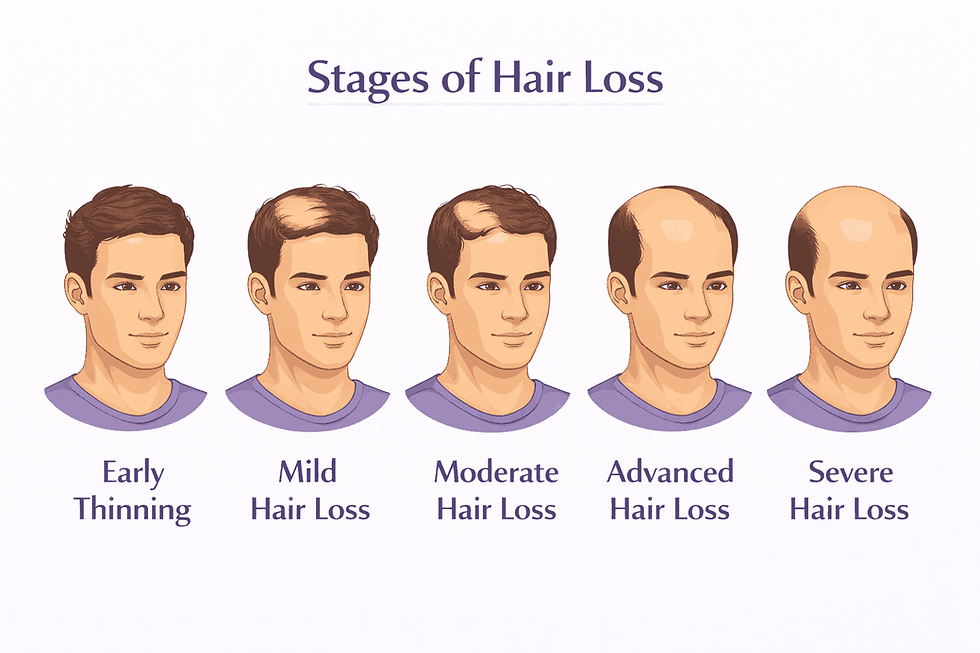
Stages of hair loss from early thinning to severe hair loss progression diagram
Conclusion
Hair fall is a common problem, but it is often manageable once the underlying cause is identified.
The most effective way to control hair fall is by building a healthy hair care routine, maintaining a balanced diet, and managing stress.
With consistent care, stronger and healthier hair growth is achievable over time.


Comments