Why Your Hair Serum Isn't Working (11 Common Mistakes + Fixes)

Updated: Aug 2
The Frustration of Hair Serums
You buy a hair serum hoping for instant shine, smoothness, and frizz-free mornings.
Instead, your hair feels sticky, heavy, or looks exactly the same.
If that sounds familiar, you’re not alone.
Many people use serums daily but never see the “salon finish” promised on the bottle.
I’ve been there too—wondering if my serum had expired or if my hair was simply “immune” to products.
The truth? Most of the time, the serum isn’t the problem—our habits are.
The way we choose, apply, and combine products decides everything.
This guide breaks down why your hair serum isn’t working, how to fix your routine, and what habits to change so your hair finally looks healthy, glossy, and manageable.
You apply hair serum, your hair looks smooth for a few minutes, and then—frizz, dryness, and flyaways are back like nothing happened.
If that sounds familiar, the problem isn’t your hair and it’s not that your serum is “bad.”
Most hair serums fail because they’re used in the wrong way, on the wrong hair type, or with completely wrong expectations.
If your hair serum isn't reducing frizz, adding shine, or making your hair smoother, the problem usually isn't the product. In most cases, it's being applied incorrectly, used on the wrong hair type, or expected to do something it wasn't designed for. In this guide, you'll learn the most common reasons hair serum doesn't work and exactly how to fix each one.

Serum works best when used within a structured hair care routine. If you’re unsure how it fits into your overall routine, read our
Complete Hair Care Guide.
Understanding What Hair Serum Actually Does
A serum isn’t a moisturizer or an oil. It’s a silicone-based or plant-based coating that sits on top of your hair to:
Reduce friction and tangles
Add shine by smoothing the cuticle
Protect from humidity and heat
Seal split ends temporarily
Think of it as your hair’s protective topcoat. But if used incorrectly, that coating can build up, block moisture, and even attract dirt—making your hair feel lifeless.
Mistake 1: Using the Wrong Serum for Your Hair Type
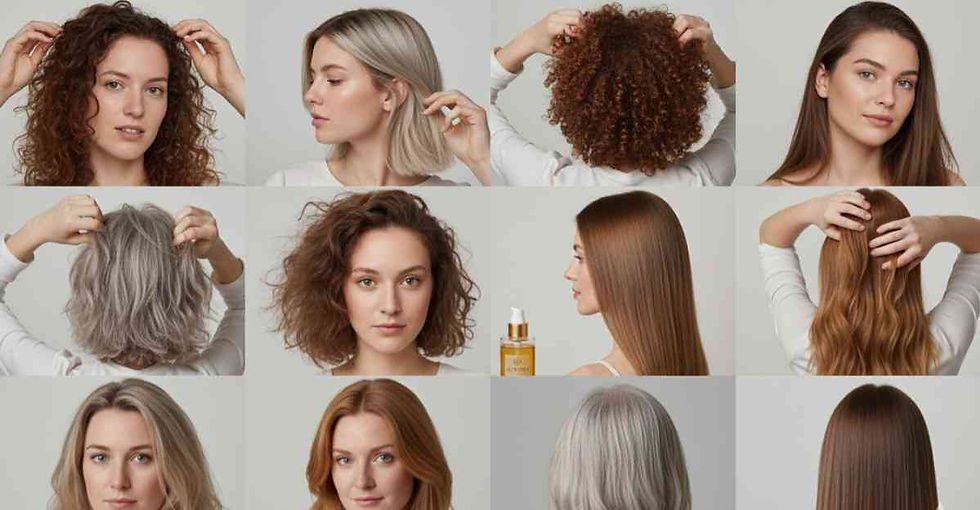
One of the most common reasons hair serum fails is mismatch. Different hair textures need different formulas.
For Fine or Thin Hair
Choose lightweight, non-greasy serums with words like “water-based,” “weightless,” or “volumizing.”
Heavy silicone serums flatten fine strands and make them look greasy even when clean.
For Thick, Curly, or Dry Hair
You need richer, nourishing serums containing argan, coconut, or macadamia oils.
These seal moisture and tame frizz effectively.
Using a lightweight serum on thick hair won’t do anything because it evaporates before coating all strands.
For Color-Treated or Damaged Hair
Go for protein-infused or keratin-based serums.
They create a micro-layer that protects color molecules from fading and reduces breakage.
Key takeaway: Match the serum texture to your hair density, not just the price or brand name.
Hair serum helps reduce friction and dryness, but it does not repair structural hair damage.
For that, you need a proper routine focused on restoring moisture, protein balance, and breakage control — which I’ve explained in detail in my damaged hair repair plan.
Mistake 2: Applying Serum on the Wrong Hair Condition
Most people apply serum straight after shampooing on dripping wet hair.
That dilutes it.
Some apply it on completely dry hair—too late for it to spread evenly.
How to Apply Hair Serum Correctly
Towel-dry your hair first; it should be damp, not wet.
Take a pea-sized amount for short hair, or two pumps for long hair.
Rub between your palms to warm it.
Start from mid-lengths to ends, never the roots.
Comb through gently to distribute.
When applied to damp hair, serum locks in moisture and creates a barrier before humidity attacks.
Confused whether you need serum or leave-in conditioner? Read our detailed comparison
Mistake 3: Using Too Much Product
More serum doesn’t mean better results. Excess product builds up and blocks scalp breathability.
If your hair feels waxy or sticky, you’ve probably used too much or reapplied without washing.
A simple clarifying shampoo once a week removes residue and resets the balance.

Mistake 4: Skipping Heat Protection
If you’re styling regularly, remember—serum isn’t a heat protectant unless stated.
Many people apply serum first and then use a flat iron, unknowingly frying the coating and sealing in damage.
Always apply a dedicated heat protection spray before styling, and use serum after styling to add shine.
Mistake 5: Expecting Instant Repair
Hair serum can’t repair internal damage. It improves appearance, not structure.
If your serum isn’t “working,” it may simply be doing its real job—temporary smoothness.
For actual repair, include deep conditioners, masks, or treatments rich in amino acids and natural oils.
Mistake 6: Ignoring Product Build-Up
Serums contain silicones or film formers that can accumulate.
If you notice dullness even after washing, it’s time to detox.
Use a clarifying shampoo or DIY apple cider vinegar rinse once every two weeks.
Follow with conditioner or lightweight serum again.
This refreshes shine instantly and lets new product absorb properly.

Mistake 7: Combining Too Many Leave-In Products
Using leave-in conditioners, serums, and oils together can overload your strands.
Each coats the hair differently, and too many layers block moisture.
Simplify your routine:
If your hair is frizzy, use only serum after conditioner.
If it’s dry, use a few drops of oil on ends, then serum lightly.
Balanced layering avoids buildup and lets serum perform as intended.
The Right Way to Include Hair Serum in Your Routine
Here’s an effective weekly flow:
Step-by-Step Hair Serum Routine
Wash with a gentle sulfate-free shampoo.
Condition focusing on ends.
Towel-dry gently; avoid rough rubbing.
Apply serum to damp lengths and ends.
Style with low heat or air-dry naturally.
Reapply a drop of serum on dry hair the next morning to control flyaways.
Doing this consistently prevents frizz and maintains a healthy barrier without buildup.
Bonus Tips to Make Your Hair Serum Work Better
A. Adjust for Climate
Humidity affects performance. In humid regions, go for anti-frizz serums labeled “humidity shield.”
In dry climates, choose serums with oils like jojoba or avocado to retain moisture.
B. Avoid Touching Your Hair Too Often
Constant touching transfers oil and dust, ruining the serum finish.
C. Combine With Healthy Habits
Even the best serum can’t override poor hair habits. Balanced nutrition, adequate water intake, and stress control all influence how hair behaves.
That’s where wellness overlaps beauty.
My Personal Experience: Learning the Hard Way
I once believed that using more serum meant smoother hair.
On a humid day, I layered two pumps before blow-drying.
Result: limp roots and greasy ends by noon.
After simplifying—one pump on damp hair, no extra styling creams—the difference was dramatic.
Now my serum lasts longer, and my hair looks polished without effort.
That’s when I realized it’s not about the product count—it’s about precision.
Common Questions About Hair Serum
Q1: Can I use hair serum every day?
Yes, if you wash regularly and use small amounts. Avoid daily use on scalp roots.
Q2: Can hair serum stop hair fall?
No. It reduces breakage from friction but doesn’t treat internal causes. Combine with scalp care and balanced diet.
Q3: Should I apply hair oil and serum together?
Only if your hair is extremely dry—apply a drop of oil on damp hair, wait ten minutes, then a light serum coat.
Q4: Why does my hair still look frizzy after serum?
You might be using the wrong type, applying on wet hair, or lacking hydration underneath. Fixing these usually solves it.
When to Replace Your Hair Serum
Every 6–8 months, assess texture and performance.
If it’s thickened, smells off, or leaves residue faster than before, replace it.
Expired serums oxidize and lose effectiveness.
Summary: How to Fix Your Serum Routine
Pick serum by hair type and texture
Apply on damp hair only
Use tiny amounts, mid-lengths to ends
Add heat protection separately
Clarify buildup regularly
Maintain a healthy scalp and lifestyle
Consistency beats quantity. Once you correct technique, your usual serum might suddenly start “working.”

Final Thoughts
Hair serums are tools, not magic potions.
Used correctly, they transform dull strands into smooth, glossy hair that feels light yet nourished.
The fix is rarely buying a new product—it’s understanding the science of how it interacts with your routine.
So next time your serum seems disappointing, pause before tossing it.
Adjust your approach.
You may realize the solution was already in your hands—literally.


Comments